Filipe Barroso is not your typical documentary filmmaker. Part software developer, part street observer and full-time knowledge hoarder, he has increasingly turned his camera toward the people, communities and social tensions shaping modern Lisbon. His approach is deliberately small-scale and hands-on: minimal crew, minimal interference and a strong emphasis on trust, ethics and getting close to real life as it unfolds.
In this interview, we talk about Lisbon’s changing identity, migration and belonging, guerrilla filmmaking, the uncomfortable line between documentary and activism, the realities of funding independent work and, naturally, whether it is actually possible to make a living doing any of this. Spoiler: Filipe’s brutally honest answer to that last question is refreshingly concise. Let’s get started!
About Filipe Barroso – see his Instagram
1. Filipe, welcome to the Brutally Honest Blog. For readers discovering you for the first time, how would you describe yourself in one sentence: filmmaker, observer, troublemaker, documentarian, activist or something else entirely?
I consider myself a pioneer species. I’ve always been a knowledge hoarder so that I could better break down any gates that might exist to reach the knowledge I’ve gathered. It mostly started with me telling stories I read when I was a kid, up to leveraging my professional work in computer science by teaching others to code or making knowledge that was behind closed doors more easily accessible. I apply all my life experience to documentary filmmaking, which is something where I feel right at home.
2. Was there a specific moment when you realised you wanted to document real people and communities rather than follow a more conventional path into fiction, commercial work, or God forbid, microstock like me?
It was a crescendo of events. I’ve always been an informed person, but the global news was affecting my mental health. Then I reduced the scope to national news, and it was the same. Then I focused on my parish, which was even worse. I decided then to take matters into my own hands and do it myself, to show what I am seeing, the world through my eyes. When I told my story, people listened, so I decided to start showing them instead.
3. What kind of training, formal or informal, shaped you as a documentary filmmaker?
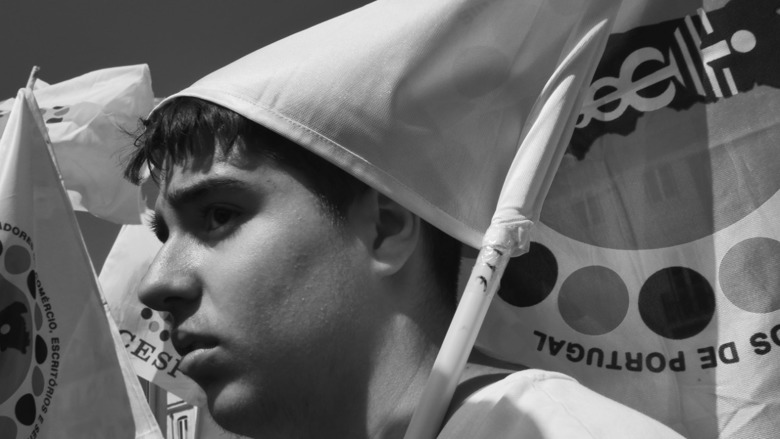
After years of seeing posters around Lisbon, I decided to join KinoDoc in 2024. It is a professional training program designed to shape me into a true documentarian. It happened at the best possible moment and mainly gave me the courage to simply… go!
Lisbon as a Character
4. You are based in Lisbon, a city that has become heavily romanticised in recent years. Lisbon is often marketed as charming, sunny, creative and still “affordable” at least for many foreigners. What does that image hide?
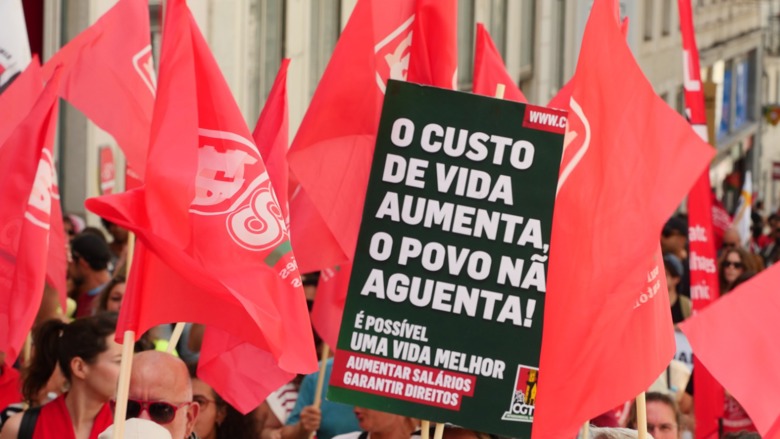
Cities are also living beings, and during my lifetime, Lisbon has changed so many times. Some changes were short-lived, while others only happened in certain parishes. But one thing is common: how it is all connected. Everyone lives in Lisbon for multiple reasons, but the city connects them all, and in the end, it is a very small city. I challenge you to find two different people who share a hobby and don’t know each other. I challenge you to talk with anyone on the street, ask for help from the heart, and see what happens. Even in the worst moments, there is always someone to come and give you a hand. While these random acts of kindness are amazing, they are really starting to happen less and less given the increase in short-lived, short-term stays of people. Because cities are living beings, it is all becoming more ephemeral.
5. How has Lisbon changed around you over the past decade, and how has that affected the stories you want to tell?
There is more culture, and way more cultural diversity. There are more places to visit, more food—more, more, more. But with “more,” we have less transparency; it’s harder to have a chat that is not transactional. That is why I opted to grab my camera, to record those who actually have something to say, for the future. It brings me so much joy to be able to find that one story among so many things happening.
6. Do you think the city’s immigrant communities are visible in daily life but still largely invisible in cultural storytelling?
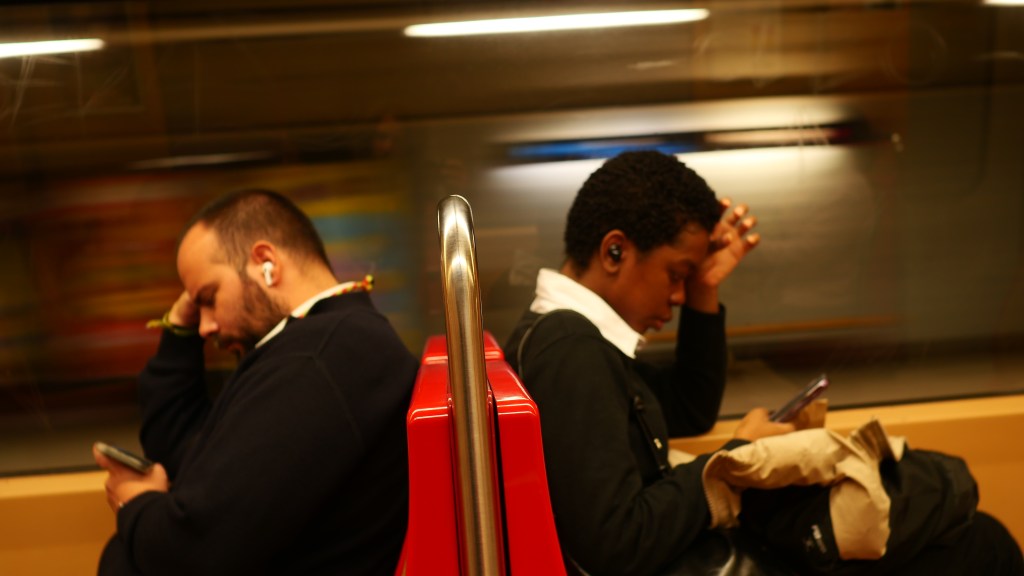
Definitely, I mean, they’ve taken jobs people don’t take, as usual but still its not that because they are mostly invisible they don’t have a story to tell. My point is more, even though I live in city center, surrounded by hundreds of people passing by me, it’s like that, they pass, they go, I am surrounded by shells of people, that I don’t know, only sometimes I find a neighbor passing by and I say hello, we chat a bit, catch up while dozens of people pass by, its weird but its the city life, if I was in a village, these shells of people won’t be there but only my neighbored, and that is something hard for people to understand.
Migration, Community and Belonging
7. Your work around the Bangladeshi community in Lisbon touches on migration, adaptation, identity and belonging. What did you learn that genuinely surprised you?
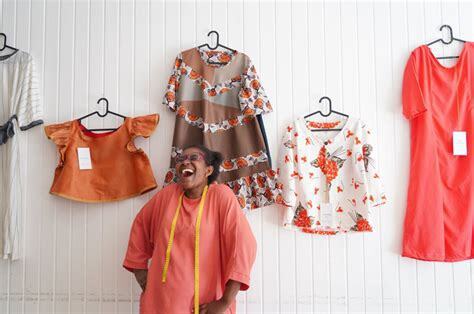
The struggle they face trying to integrate, and the effort they put into fitting into Portuguese culture. It is no different than the countless Portuguese people who emigrate and establish “Casas Portuguesas” abroad. The Bangladeshi community, no different than any other, tries to balance its own culture with the culture they are adapting to. The lack of empathy for anything that is different is a thorn in society that prevents people from identifying with other cultures.
8. When you enter a community with a camera, what is the first thing you try to do and the first thing you try very hard not to do?
The hardest part is picking what to focus my camera on. I try to film what is interesting to me, things I am seeing that are easier to show through an image than through words. There is nothing better than a sequence of images with sound to provide proof of the event that is happening in front of us.
9. How do you build trust with people who may have good reasons to be cautious around cameras, media or outsiders telling their stories?
Through my word, my honesty, and my strongly grounded values. I know that through these traits, people know they can trust me to preserve their stories and tell them as clearly as possible.
Ethics of Documentary
10. Documentary often claims to show “truth,” but every frame and every edit is a choice. How do you deal with that power?
Ethics. Ethics above all. I’ve gained something incredibly precious, which is the trust of those I have filmed, and I want and need to honor them. One really important thing is that I transmit clearly what my goal for filming is, and I stick to it. I don’t say that I’m filming an event only to then focus on a personal detail. At the end of the edit, I leave a part of me in the film, but it is my best part, free of my own opinion. What is left is art.
11. Have you ever decided not to film something because it felt ethically wrong, even though it might have made a powerful scene?
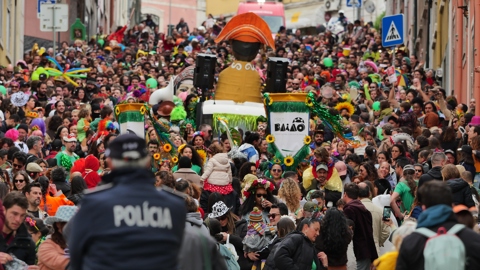
Besides shots that involve children, I have one story I can tell. During a CHEGA protest, I had a perfect shot. Someone was talking to the camera, being truly xenophobic and racist, and I positioned the camera in a way that you could read “DEATH TO FASCISTS” on the wall behind him. However, after listening to him, you could see a lack of awareness; even through his discourse, you could tell he was just echoing others. I didn’t feel it was entirely his fault that he was talking like that, but rather his surroundings. I didn’t feel like giving so much focus to a person who, with some love, could probably understand and see his mistakes. So, I opted not to use the footage.
12. Do you believe documentary filmmakers should be transparent about their own point of view, instead of pretending to be completely neutral?
That is basically the difference between being a journalist, a reporter, and a documentarian. A documentarian, in their essence, will never be a purist regarding reality; they will always introduce their opinion, even if it is only their point of view. Let me backtrack a bit by saying I am also a documentarian focusing on the Kino style, also known as Guerrilla filmmaking. This means I make do with what I have and simply go shoot. This way, you get closer to reality than big productions with a lot of people filming, improving sound, and making edits. Even with a strong guiding hand, their final product will contain a lot of small opinions from different people. Meanwhile, with my style of work, 99% of the work is me. It’s just me on top of what there is to film, the light, the edit, the sound, the subtitles, where I publish, and all of it.
Yellow Hat
13. Tell us about Yellow Hat Kino, Code, and Pedals. Is it a production platform, a personal creative identity, a way to build direct support around your work or all of those things?
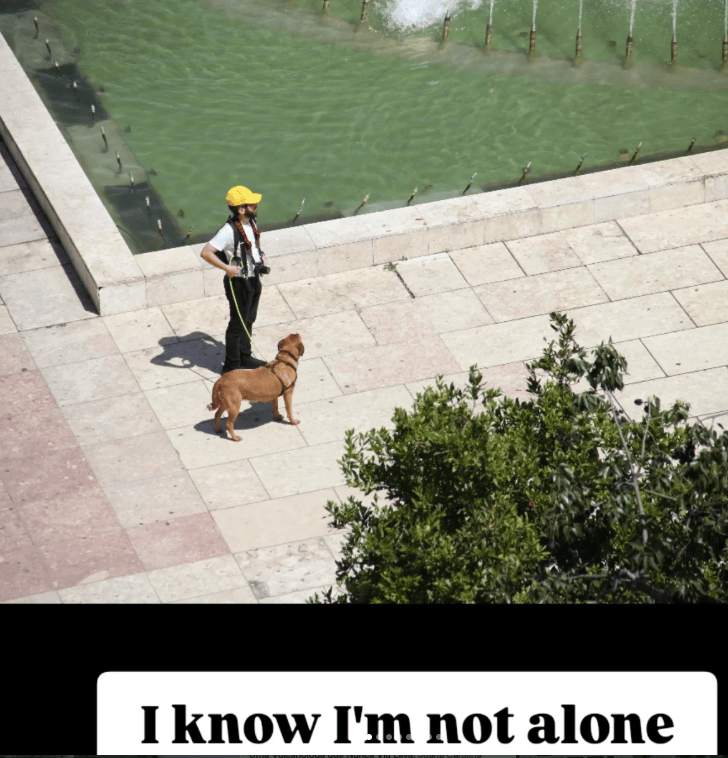
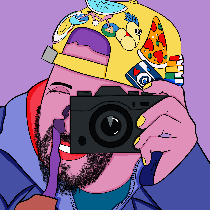
In the tech world, we often talk about black, grey, and white hats. I’m choosing to wear a Yellow Hat. This color represents a deliberate shift toward building software explicitly for social good and using my skills to observe, support, and document Human Rights protests. It’s about leveraging technology and physical presence not just for innovation, but to actively protect and uplift our communities. The ‘Kino’ in my vision is driven by the raw, unifying power of documentary filmmaking. For me, the camera is a tool for empathy. My focus is on creating films that shine a light on underrepresented minorities and critical social topics that often go unseen. It’s about capturing real, unfiltered stories that challenge perspectives and bring marginalized narratives to the forefront where they belong. Finally, the ‘Pedals’. This isn’t just about getting from point A to point B; it’s an active fight for the right to a healthy life and sustainable cities. Biking rights is linked to broader human rights demanding safe, accessible, and equitable public spaces for everyone. Life on two wheels is a daily commitment to pushing for a better, healthier, and fairer world.
14. Why did you choose Ko-fi to support your work? Is direct audience support becoming necessary for independent filmmakers?
As a software developer at heart, I wanted the easiest way to sell, host my portfolio, and face fewer hurdles in payments and taxes. I found the latest version of Ko-fi to be ideal. I remember when it was simply for giving tips, but now they have a huge amount of features that suit my needs perfectly.
Visual Style and Influences
15. What kind of images are you instinctively drawn to: controlled compositions, rough immediacy, street chaos, quiet gestures, or something else? Please provide some examples to illustrate.
Rough immediacy of quiet gestures. One of my favorite plans in my Lisbone Baas Kora documentary is me following the build up of the food being prepped, following the place, until is being given, with the crescendo of someone speaking to the audience becoming louder and louder. At same time there is the subtle plan of a food delivery person on a bike, watching a protest against right wing.
16. Which filmmakers, photographers, artists or everyday influences have shaped the way you see?
I must say four names, three contemporary that I follow closely their work that is Petra Costa, Louis Theroux, and Andrew Callaghan. But one that clearly defined many years agora was Frederick Wiseman. The way he recorded the moment and the moment after, is incredible. He has work that clearly he had vision that while in his time might have not been interesting, nowadays is ever so precious. But one thing I must say, I try to go to small concerts, museums, expositions, theater, as much as possible, and that help me defined who I am as a documentaries. Absorbing all books as I did in my life helped me define who I am.
17. Tell us about the gear that you shoot with on most days, as well as what you use to edit your clips.
I am filming with my dear Panasonic Lumix G97. I have a OM SYSTEM M.Zuiko Digital 17mm F1.8 II. Then for sound a Sennheiser MKE600 connected to TAscam DR-40XP. For lighting, a small battery and handheld LED lighting that I can pick and color and warm. For software, I am proud to say that I used the open-source program Kdenlive for a long time, until I saved some money and time and started using Final Cut Pro.
Money, Funding and Survival
18. Let’s be brutally honest: can a documentary filmmaker in Lisbon survive from this kind of work?
No, please send help.
19. Do you think politically engaged films are easier to praise than to finance?
When they are financed, you often feel dirty watching them. You know it was pushed by a certain political side, and it starts to feel more like propaganda. However, when done as purely as possible, neutral and with ethics, there is a possibility to capture a glimpse of memory and stick it to the screen.
Plans
20. What projects are you currently working on, or hoping to develop soon and what kind of support would make the biggest difference to your work right now?
I am working with two friends on a documentary about Evangelical churches. Personally, I am moving forward with some possible new documentaries; persistence is key here. The biggest difference is having people available to talk with me. Agendas are the death of a documentarian.
Thanks, Filipe, for your time and wish you continued success.
About Alex
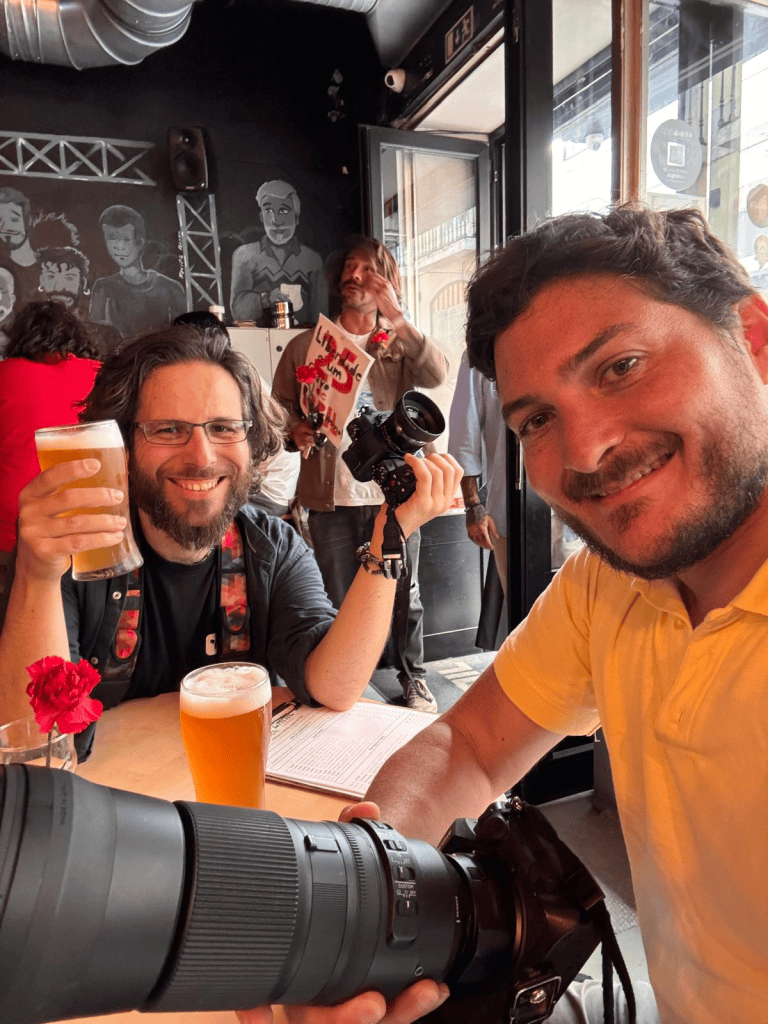
I’m Alex, eccentric, based in Lisbon, and on a mission to explore every corner of the globe while capturing stock images and footage along the way.
For the past 12 years, I’ve been grinding as a travel photographer/videographer and freelance writer. Along the way I’ve also written The Brutally Honest Guide to Microstock Photography, a book packed with war stories and practical tips for anyone crazy enough to enter this business and more recently, The Brutally Honest Guide to Drone Laws in Europe.




Leave a comment