Interview with Leonardo Baldini, Book Cover Elite Contributor at Arcangel Images
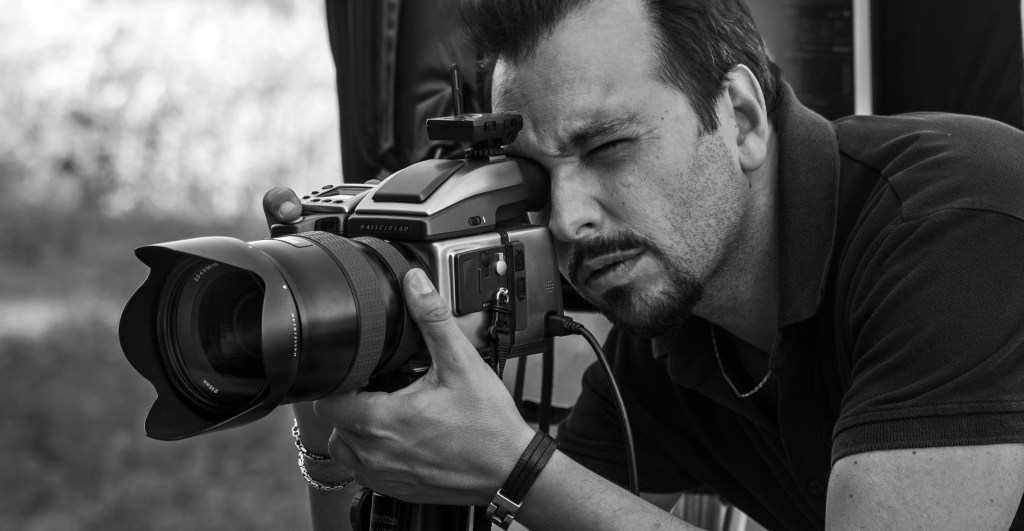
Welcome to another exclusive interview with a Stock Wizard as I’m very excited to welcome Maestro Leonardo Baldini from Tuscany, Italy. Leonardo is an Elite Contributor at Arcangel Images having licensed over 120 images. Let’s get started!
Ciao Leonardo, pleasure to have you on here. Let’s start from the very beginning of your professional journey. Please you tell us a bit about yourself – where you’re from and how you got started in photography? What have been some of the most valuable experiences on your journey to becoming a professional photographer?
Ciao Alexandre, it’s a pleasure to be here!
I bought my first camera in 1996, for simple necessity, at the time I was a technical illustrator for manuals for the use and maintenance of Piaggio scooters, such as the famous Vespa for example (If you are the owner of a 1997 Vespa, you probably also have a use and maintenance manual designed by me 😄). The photographs they provided me for the drawings were very scarce and difficult to reproduce, so I bought a camera and shoot the photographs on my own to make my work easier. In the meantime, I started to dedicate myself to photography in an amateur way and the passion immediately took over.
After a few months I had built myself a dark room in the garage and every weekend I went around photographing landscapes and people, both in slides and in black and white films, which I then developed and printed.
Slowly I started to do some work and to strengthen collaborations, with the world of journalism, football, car racing and fashion. Everything was useful, I would tell you a lie if I told you that one of these experiences was not importatnt to build a photographic style and a trained eye. Incredibly, already in 1998, I started collaborating with an online image stock agency, one of the first… But it didn’t last long.
My career as a photographer was dotted with totally different works, going through every kind of photography. In the end, however, I realized that advertising photography was my field, along with portraiture, and I focused on that. For 15 years now I have dedicated myself exclusively to these.
You’ve worked with major brands like Sony, Mercedes-Benz, and The Walt Disney Company. Do you have any favorite collaborations or memorable moments from these experiences?
They are all collaborations that born from the professional path, all very interesting and different from each other. Bus the fact is that when you collaborate with big brands, you almost always lack that creative freedom that I love.
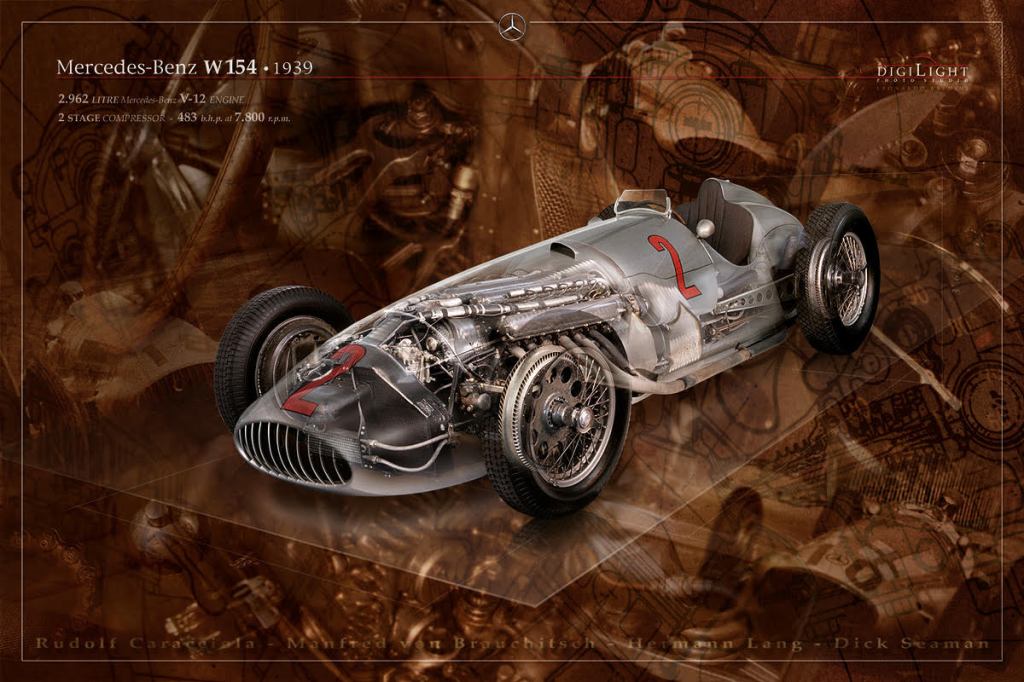
In my heart remained the collaboration with Mercedes-Benz, where they gave me carte blanche to make a transparent representation of a historical piece of their “Classic Center” in Stuttgart, It was the car Rudolf Carracciolola raced in 1939, the only example in the world. As a car racing enthusiast for me it was the best!
It was 2001, I was still shooting with medium-format film, and scanners were used to bring the photographs digitally, it was a monstrous job to design and create all those transparencies, also because the mechanics of the “Classic Center” slowly disassembled the entire car, and there was absolutely no guarantee that it would remain in the same position for the subsequent photographs. With today’s equipment it would be child’s play, at least the shooting.
In your biography, you mention a passion for merging photography with painting and cinematography. How do these different art forms influence your creative process?
Since I was a child, I have always drawn and painted, I am passionate about cinema and cinematography, so the process happened naturally. In the beginning I began to explore the world of photography to obtain faster results than painting.
In fact, after a few months of photographing, I started using Photoshop, parallel to the darkroom, and after a year I was already doing the first digital montages. When you have a trained eye in drawing it is easier to understand when certain post-productions have the right realism. Unfortunately, photographers often have no idea how contrasts, highlights and shadows work, not to mention perspective. And they create elaborations that make no sense and are full of errors.
Based in Tuscany, Italy, a region renowned for its rich artistic heritage, do your surroundings inspire your work? How does the Tuscan landscape influence your photography?
Tuscany, its landscape, its cities and its art, are an inexhaustible source of inspiration for me. I have always tried to include my native land in my work.
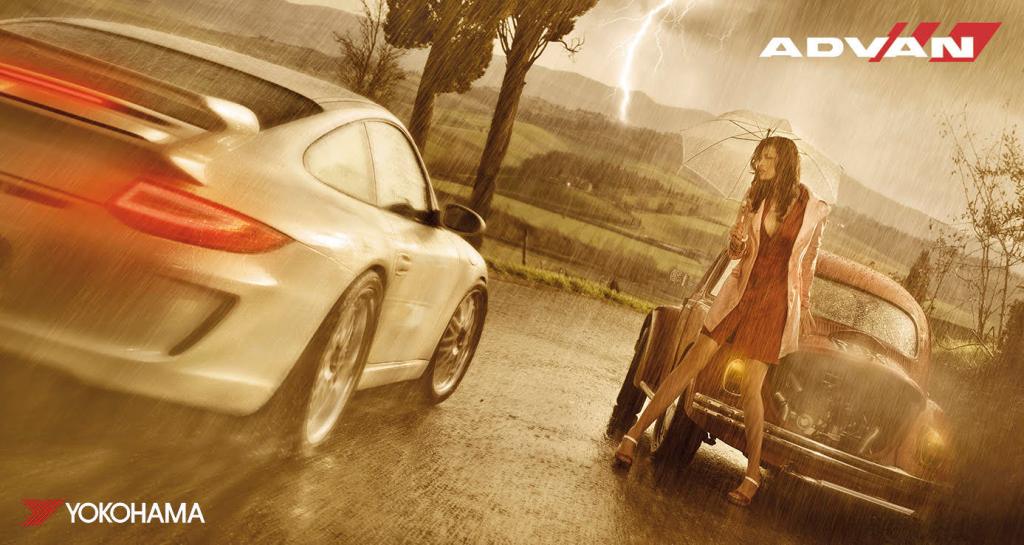
One day I was contacted by Yokohama, the famous tire company, to realize an advertising campaign set in Tuscany. In addition to being a photographer for them I was an useful location manager and general organizer as I know Tuscany like the back of my hand.
At the same time also several fashion shoots have been made with the backgrounds of Tuscany in advertising campaigns, not to mention the portraits, there is a corner of Tuscany that represents each of us 🙂
With the book covers, Tuscany has become the stage of almost all my works, because it also knows how to give away decidedly international locations. I was finally able to use incredible locations that I had written down in my notebooks, but that I still had not had the opportunity to exploit.
How long have you been contributing to Arcangel, and how has your journey been so far in reaching an impressive 3,606 images and Elite-Level status?
I joined Arcangel in the spring of 2019, the first year was difficult, because I uploaded images that were rejected or didn’t sell. I didn’t understand…as they weren’t bad pictures, it was frustrating. The world of book covers is truly a world of its own.
Then the damn Covid, the work dropped drastically, and I decided to commit myself to understanding this world that for me was wonderful, I saw the possibility of using all my knowledge on drawing, photography, colours, history, cinematography and post-production. If I had to give a new start to my profession, I wanted this to become my main job in the future, in the end it was the only photographic genre that contained everything I loved.
So from 2021 I decided to invest most of my time to understand Arcangel, studying the covers, and trying to get the most out of all the indications that were provided by Nash Mascaro and his staff. At that point I started to produce non-stop, nothing exceptional for me, I was only doing what I always wanted to do (and what I regularly did as personal projects), only now they had a purpose and a goal.
At the same time, I gave myself the rule of uploading a small set every week, this goal has helped me to have perseverance in these last three years.
In November 2021 I was invited to join the Arcangel Elite, I was very pleased, and I managed together with the Arcangel staff to focus even more on market demands, optimizing my Shootings and my post production.
Of course, a lot of effort, investment and dedication, but in my opinion it is the one and only way to achieve results in this sector.
What advice would you offer to other book cover artists who may be struggling with rejections or finding it hard to achieve consistent sales (like myself)?
In reality, the only way to get less waste is to study the market and work on as many images as possible and more possible situations. That’s how I learned.
At the beginning I made images that I think were perfect for covers, but today, reviewing the pictures rejected (and not), I understand perfectly where the errors were. And it’s not just about photographic quality, but about a whole series of peculiarities that must coexist within every photograph, such as the simplicity of reading, the right color combination, the possibility of giving the viewer a broad interpretation, the balance of the volumes occupied by the subject and the background, the space for the titles, and many more.
Over time it becomes more natural, rejections decrease and sales improve, giving you more confidence and optimizing all the process.
Giving up or continuing to make the usual images that did not sell until that moment, it makes no sense the important thing is to understand and learn from your mistakes.
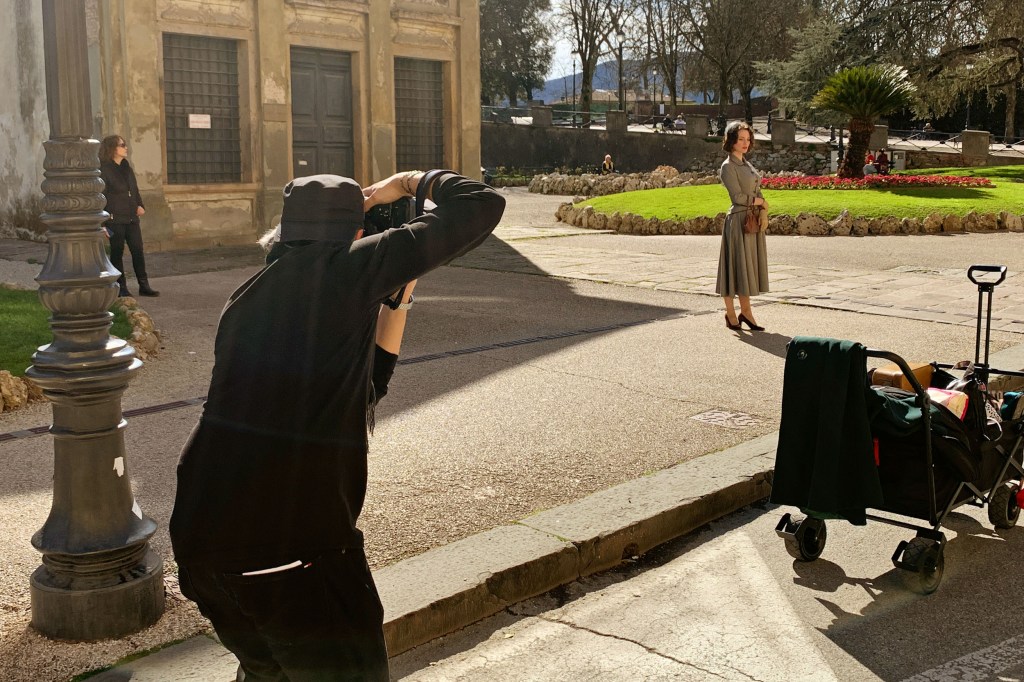
Behind the scenes…
You rightly mention the need to research, so going into more detail, do you consider the target market when shooting? For example, does the U.S. market demand something different from the European market?
I do it almost always, but I’m honest, but I’m not able to do it well! Every time I try to make a Shooting for the United States market! But in the end I sell it somewhere else in the world.
Once maybe I don’t think about it, I shoot in a Tuscan village thinking that I will only sell in Italy, France or Northern Europe, and I find the cover on an American book…
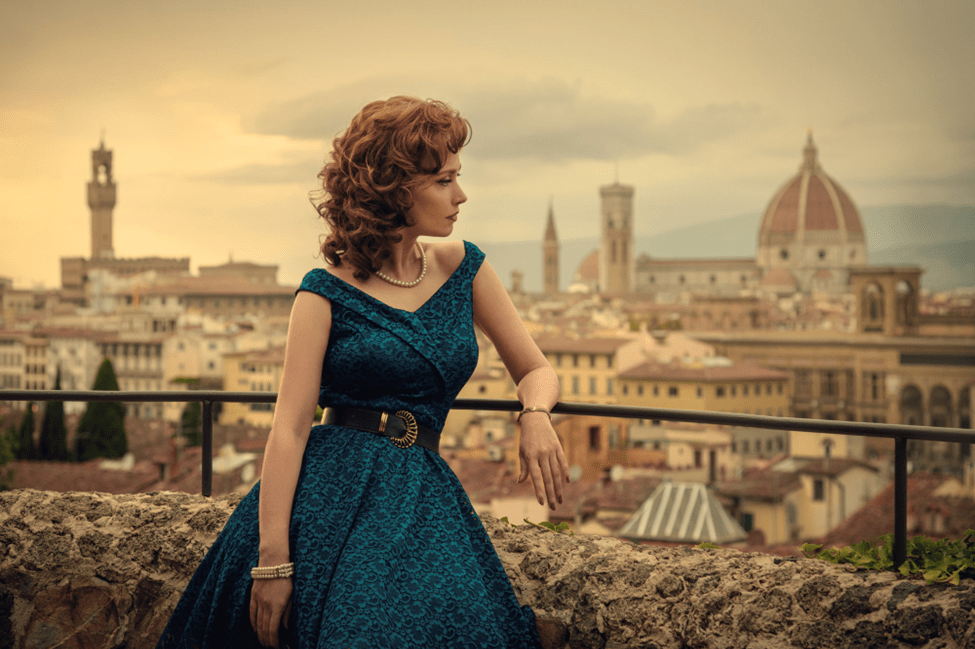
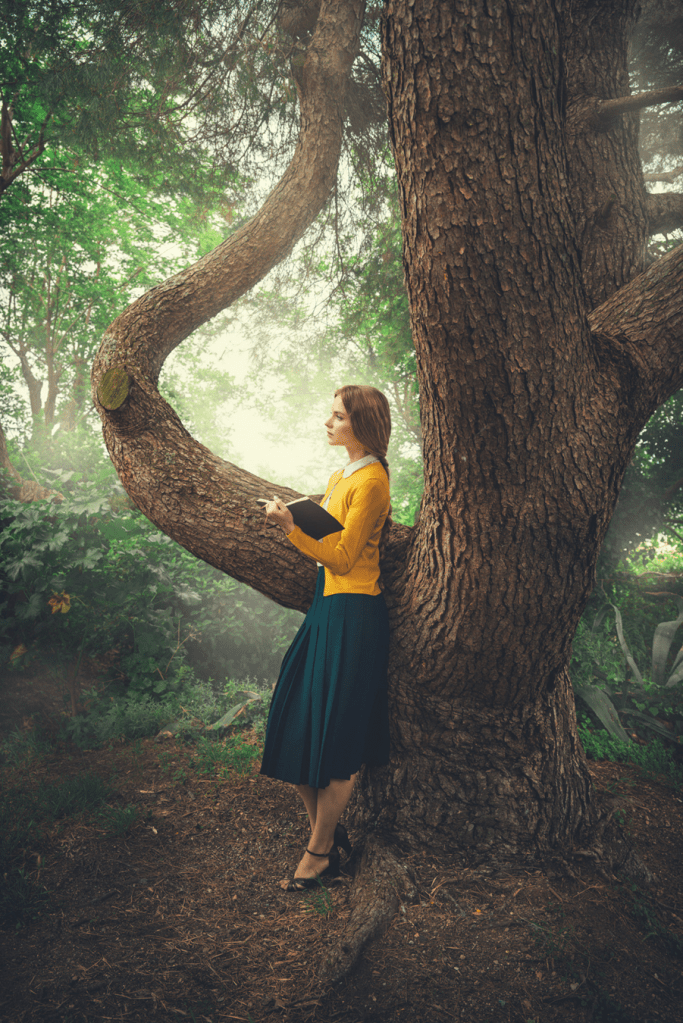
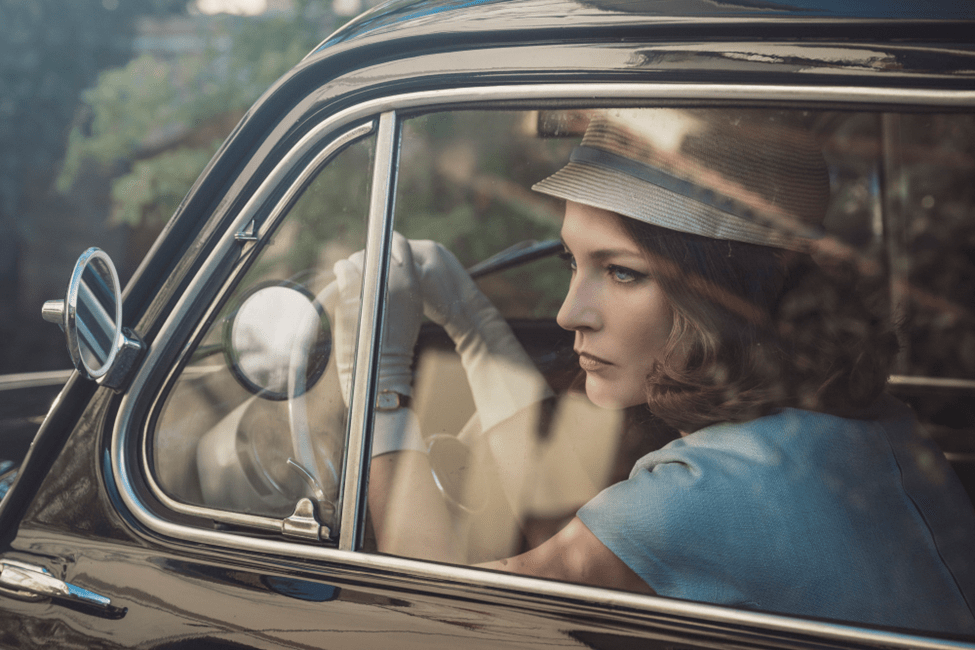
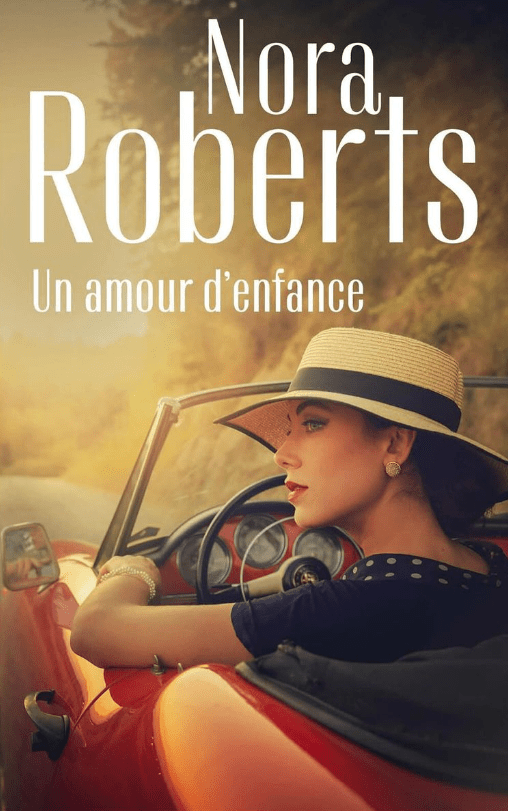
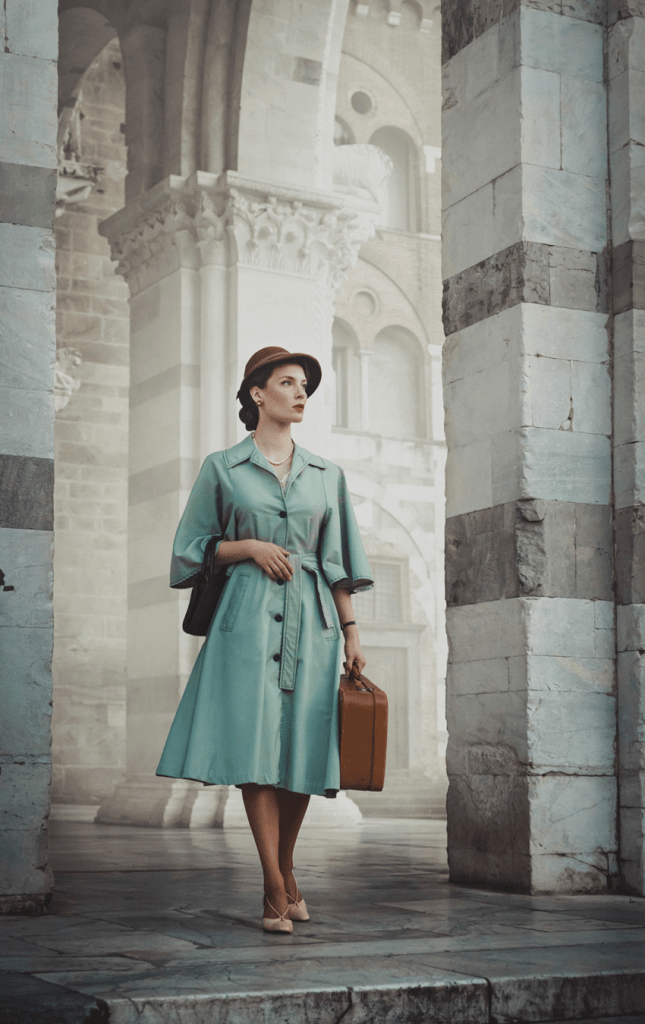
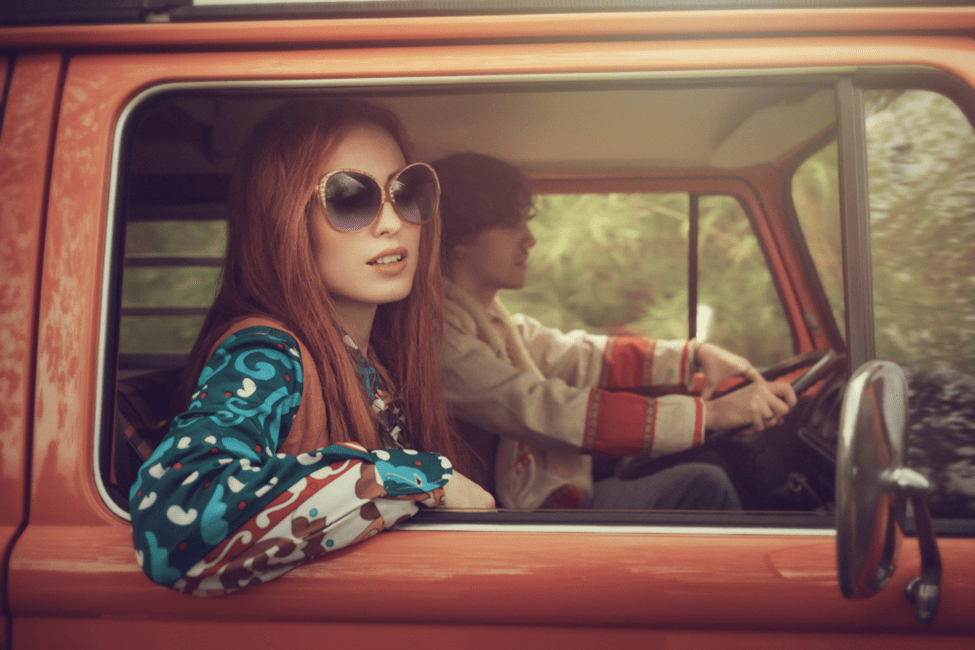
It’s certainly a long-term game when it comes to success with book covers. How would you describe your style for book covers at Arcangel? It seems you focus on bold colors, with many shots evoking a vintage feel from the 1940s through the 1970s.
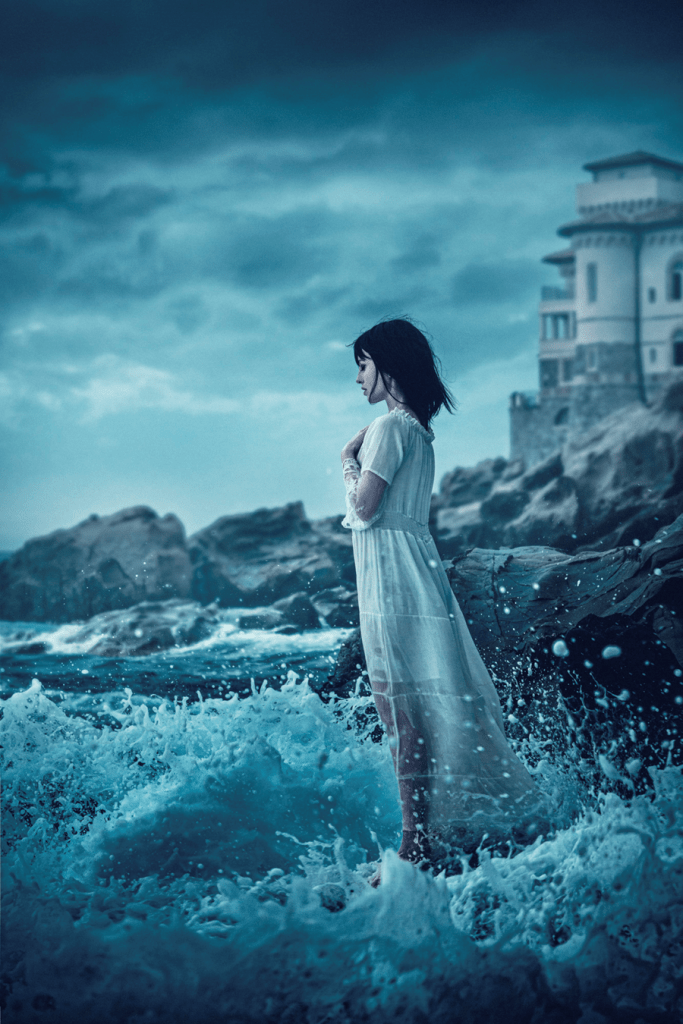
I would define my photograph as “illustrated and cinematic”. I am a fan of cinematography and the use of colour as an active tool of what I represent, I have studied a lot of colour theories and their harmonies. This has been very useful to me for book covers, which also live on this on the shelves of bookstores.
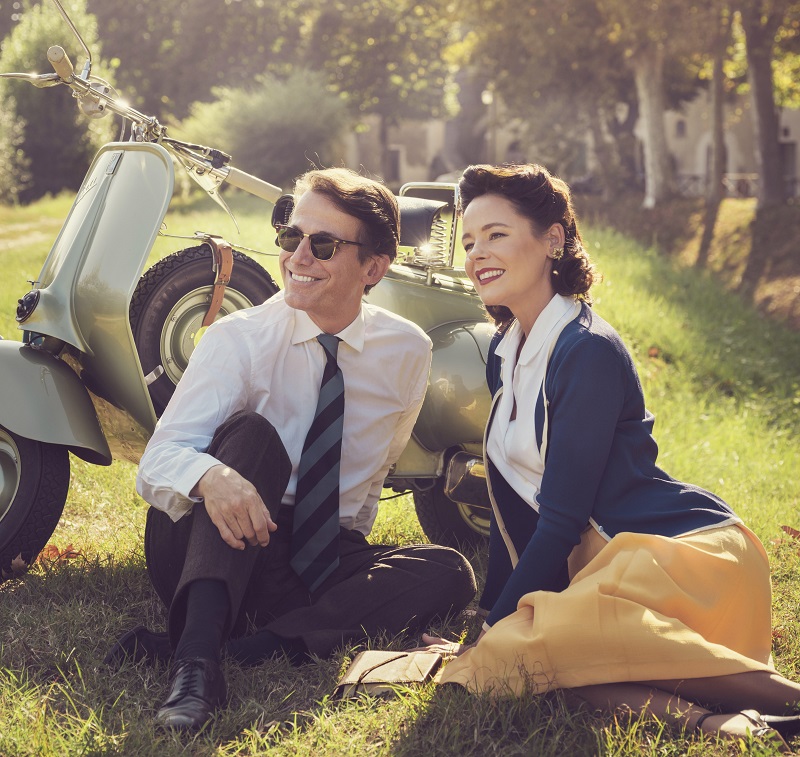
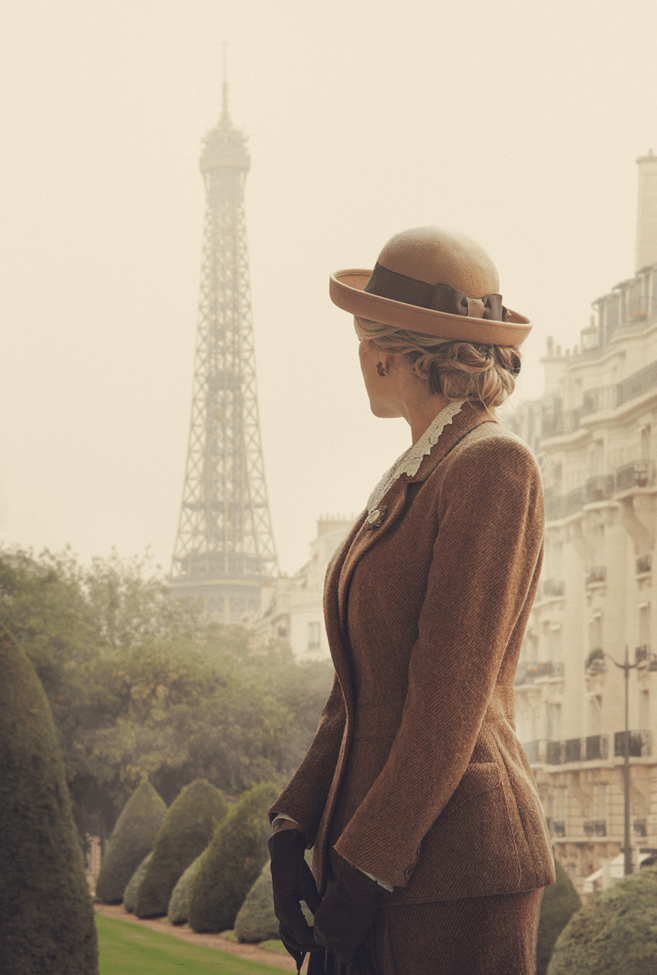
When I joined the Elite division and they asked me to specialize mainly in a sector, I decided to dedicate myself to vintage, I love history and I am at the same time a collector of vintage objects, I have almost 2,000 objects of all kinds in my collection, bought out of passion in markets and accumulated from 15 years of historical photo shoots.
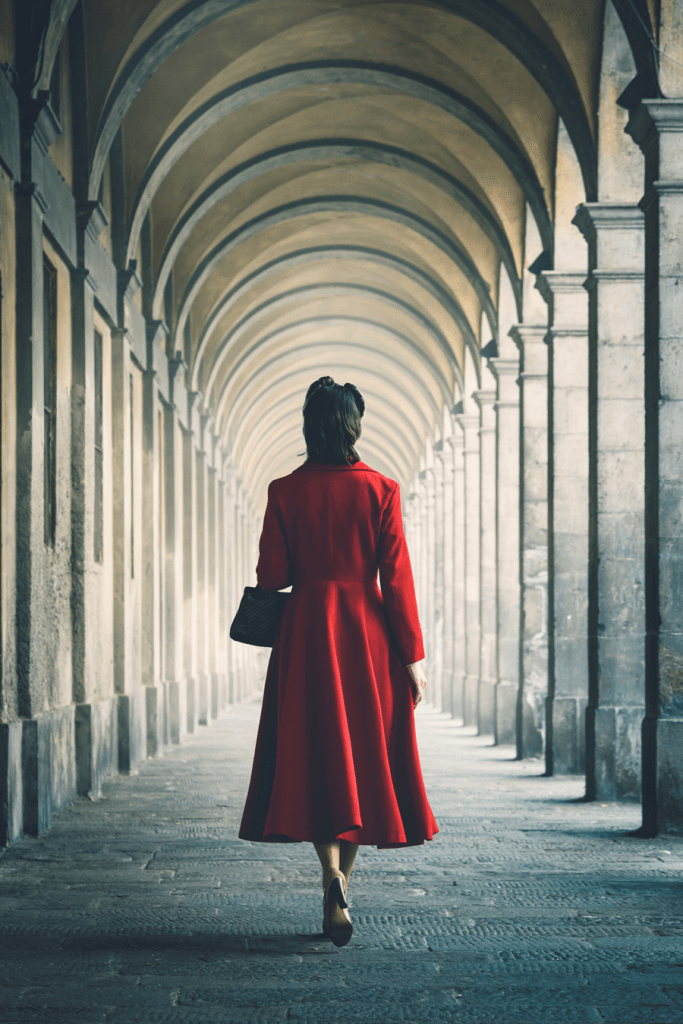
I love the fashion of the past, the femininity and elegance of the female figure from the 40s to the 70s, so I decided to collaborate with a costume designer, study costume history and also invest in vintage clothes and accessories, building a small costume inside my studio.
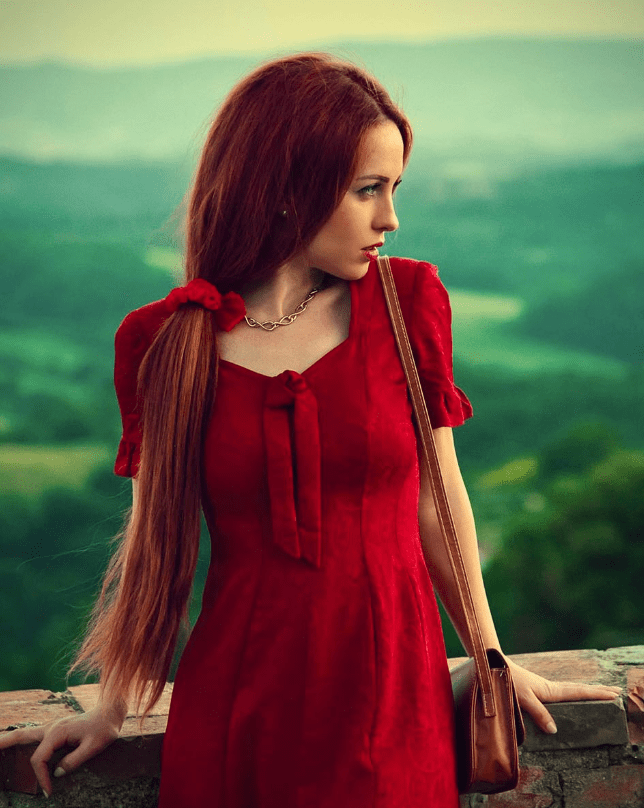
My favourite period is surely the 50s and early 60s as it was the period in which the woman’s forms were exalted in a wonderful way. Not to mention cars, advertising graphics and design. A truly wonderful period.
Behind the scenes…
How do you capture the right emotion from the model(s) during a shoot? Do you mostly work with professional models (I’ve noticed some recurring faces)? On a side note, they all look stunning!
I’ve been photographing models for 25 years now, I’ve gained some experience and a certain empathy, these are two fundamental things to get what you want from anyone, not just from professional models.
Only 20% of the models you see in my photographs are professionals, the rest are very normal people. I recruit them while I’m around, or through social media, including Instagram. In fact, they are often the ones who contact me.
Most of them are at their first photographic experience, it’s about seeing beyond the person, seeing the potential and knowing how to guide them during the shooting.
You can get incredible results, often professional models are too attached to fashion poses, which work very little in the world of covers. Then of course there is post-production that helps in the final phase.
It appears that you often work with a range of makeup artists, models, and stunning locations. How do you manage the logistics and coordination of these resources?
In a very simple and systematic way: I plan the shoot, choose the location from my database (I regularly look for new locations, photograph them and enter them in a Archive) and I contact the Model.
We plan the costume tests and the day we are going to shoot based on everyone’s availability.
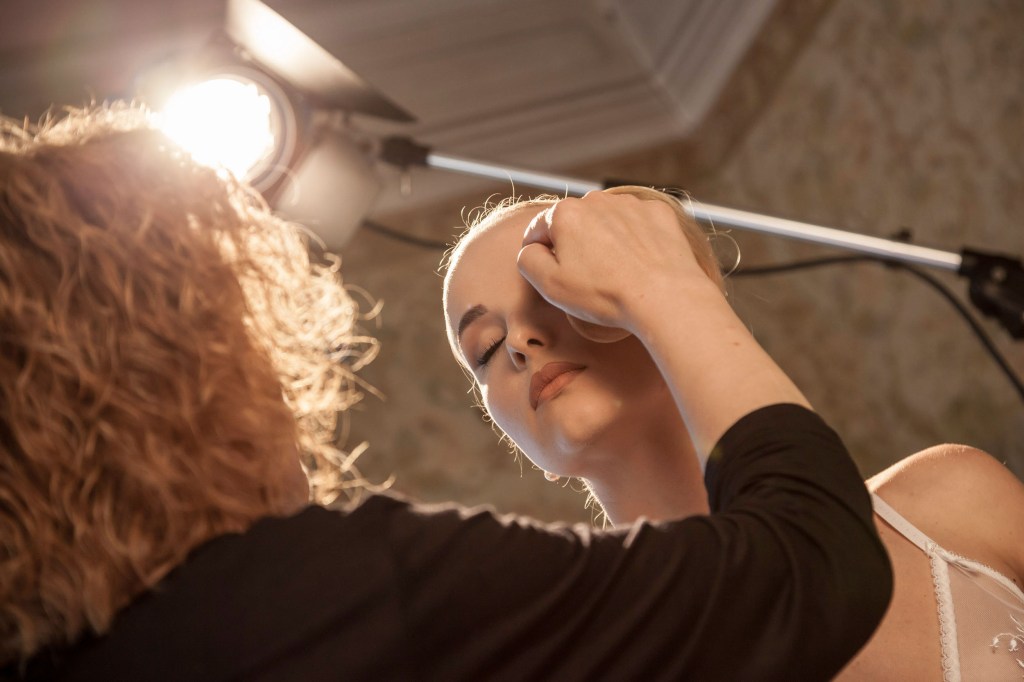
After that, on the day of the Shooting, in the morning we prepare the model in studio with the costumes and makeup, then we move to the location and try to optimize the time available by making two or three changes of clothes.
I’m a very picky and precise person, and I always try to have everything organized, because the last thing I want is to have problems on the stage. Which then, of course, always happen! Let’s say I try to have as little as possible.
Behind the scenes…
How many book covers have you sold so far, and which have been some of your favorites?
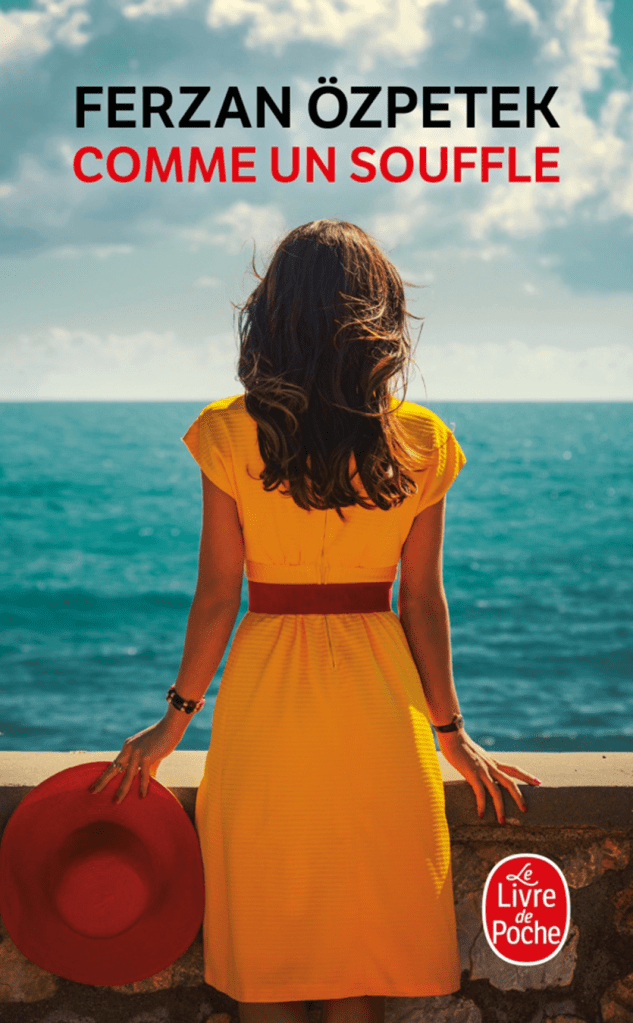
Right now, I’m at 122 covers in total, there are many that have given me so much satisfaction. I definitely love the ones where the client keeps my photograph unchanged, since every time I try to tell a story. There are several, and the satisfaction of seeing your own photographs on the books of the great authors is priceless.
However, I don’t hide that sometimes designers amaze me positively in their elaborations.
Impressive to hear about the number of covers and many more to come! How much of your time is devoted to creating book covers for Arcangel?
It’s hard to determine a precise amount of time, because in reality I only do one shoot per month for Arcangel, at most two. But planning and post take up a lot of time.
Being a creative job, and that I love, I practically dedicate myself to it continuously, I can’t go to a new place without trying to understand how I could use it for my shootings or look at people without asking myself how they would look on a book cover. At the same time when I carry out post-production, I like to experiment and take care of the details.
It is a mental process that never turns off, but at the same time it is natural and does not weigh in the slightest.
What has been your favorite shoot so far for capturing book covers at Arcangel, and why?
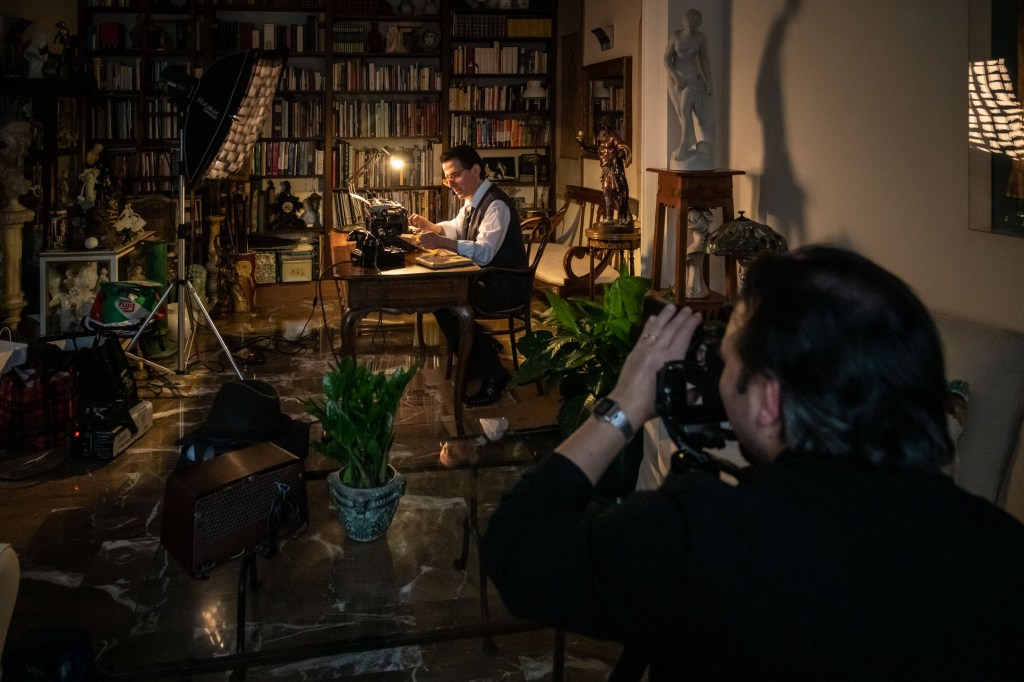
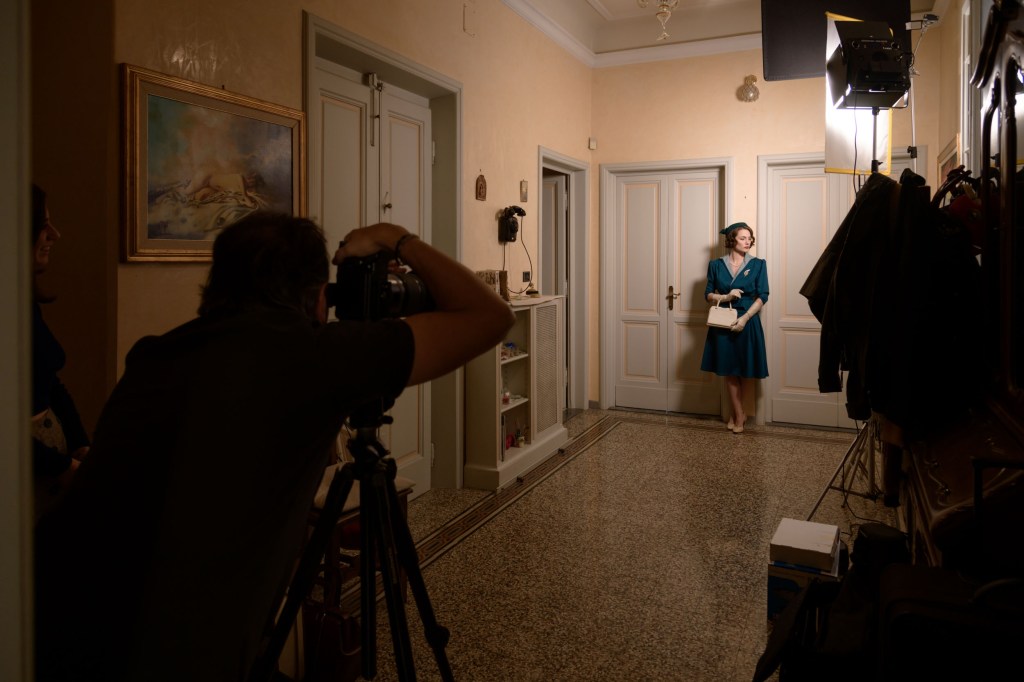
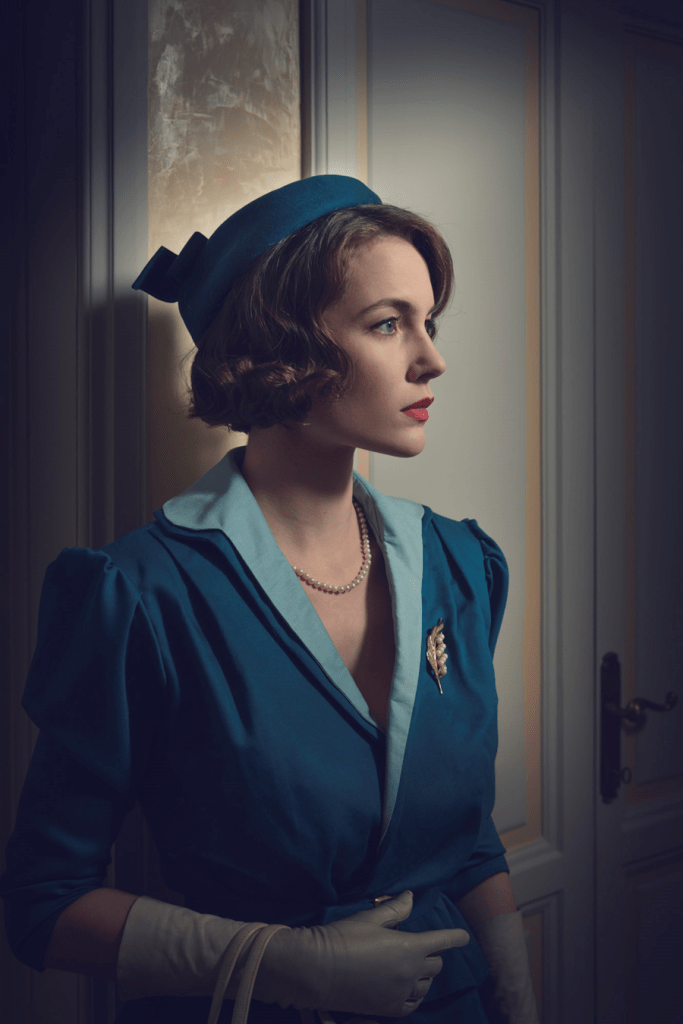
It is a 40s Shooting, entirely designed at the table and built inside a historic residence.
I wanted so much an actress who in my opinion had excellent potential, I made her arrive from 350km away, and we invested to make her a tailor-made suit, based on a model from a 1942 magazine.
Those images sold a lot, a fabulous alchemy that gave all the desired fruits. Very difficult to repeat. That Shooting made me understand many things, and even today the beautiful collaboration with this actress continues, who now loves these vintage sets and Arcangel.
Behind the scenes…
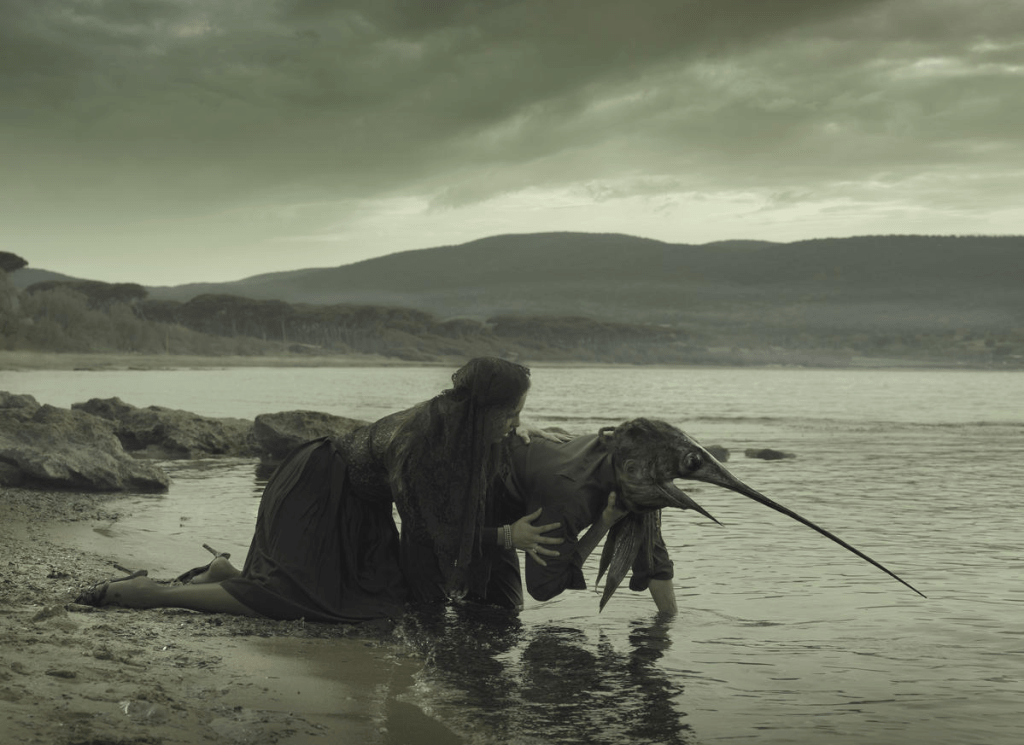
What’s the weirdest or most unexpected source of inspiration you’ve ever drawn from for a photoshoot?
One day while I was at the supermarket I noticed the head of a swordfish, a real head! As beautiful as it is disturbing. I thought it would be fantastic to do a shooting on a fisherman. And I did it! I still remember the stench of that head! Even more so if my wife remembers it who had to keep it in position to photograph it on location, and then replace it in post-production 🙂
Haha great shot, on a more serious note, could you walk us through your workflow for creating a sellable and trending book cover?
I would like to answer you that I have the secret recipe to do it, but it’s absolutely not like that!
In fact, I also always try to find the right compromise between what I like to shoot, and market trends, but then in fact the market itself constantly confuses me.
In any case, everything starts from a study of the covers that are currently on the shelves of bookstores, combined with the trends recommended by Arcangel, all mixed in a series of notes that I write down regularly, writing down interesting ideas and situations.
At that point I decide the shoot to be carried out, I choose the location and contact the model that I consider to be the most suitable. A few days before we do the costume tests, creating the right combinations between the shapes of the model and the colours that we will combine between dresses and locations.
Of course, I use a professional makeup artist and the advice of a costume designer, but not always.
On the day of the shoot everything must be decided and in place. When I’m on stage I want to dedicate myself totally to photography, without worrying that the model has something that doesn’t work.
Then comes the moment of post-production, where I use the last weapons I have available to exalt shapes, colours and atmospheres, to obtain the final result that I had set myself, which, if everything went as it was supposed to go, it should be an image with all the right elements to get sales.
Are there any unique challenges you face when photographing book covers compared to other types of photography?
Absolutely yes, all the challenges I face in making images for book covers are unique. No other sector of Photography is similar to this.
What seem to be images created in all freedom, are actually images carefully studied and that must meet an incredible number of requirements, which it is almost always impossible to cover completely.
Can you describe a challenging book cover shoot and how you overcame the obstacles?
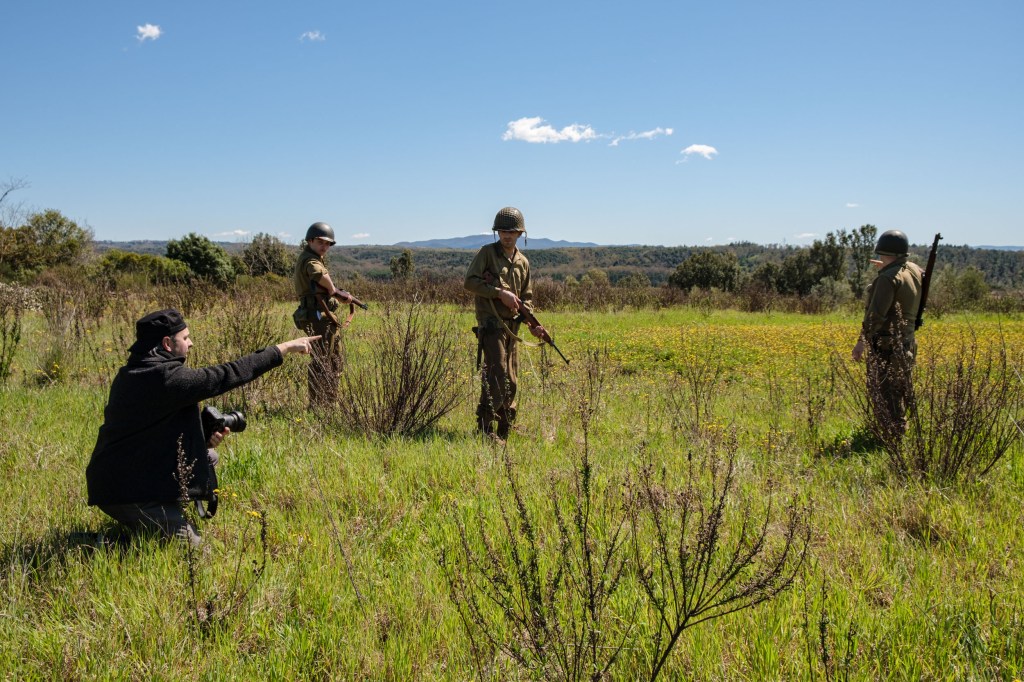
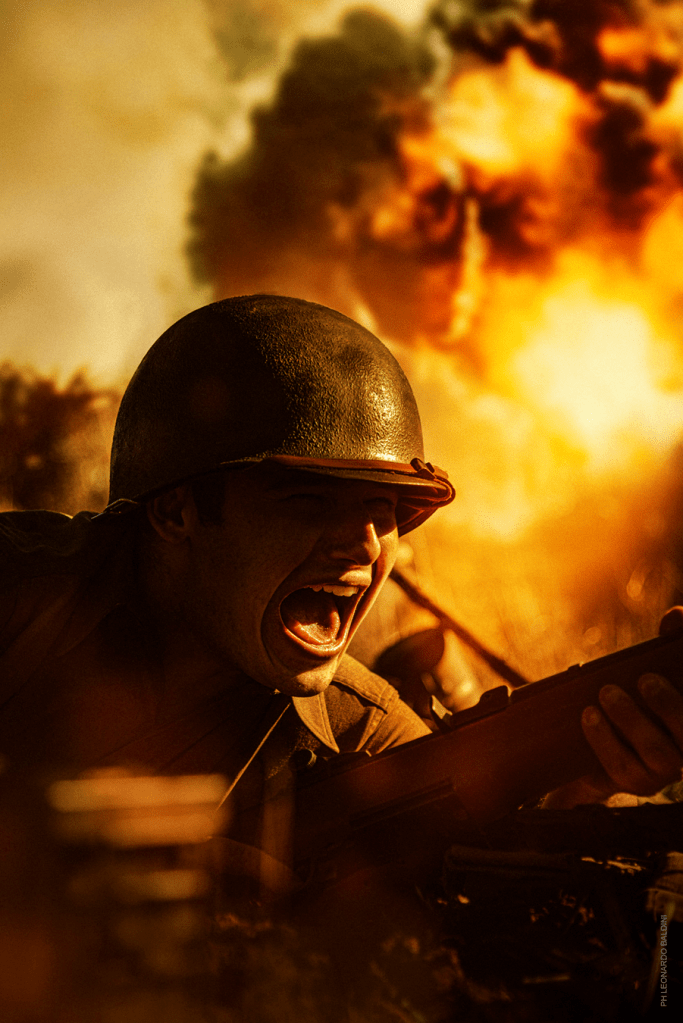
It once took me almost two months to organise a shooting of a World War II battle, a huge effort to be able to put together four American soldiers with all the correct and realistic equipment.
We walked a kilometre in the woods to get to the location, then, when everything was ready, these guys started fighting among themselves, until they practically decided to go home. My wife and I watched everything in disbelief and helpless, we looked at them astonished and amazed, increasingly aware that all our work was going up in smoke!
Luckily, we managed to hold them back (no, we didn’t use weapons!), we talked to each other and in the end we got a climate calm enough to be able to shoot. In the end, we used their anger and discomfort to obtain decidedly powerful and credible photographs!
A unique experience, luckily then everything was resolved and we collaborated again even lately, joking on top of what happened.
Behind the scenes…
What are some of your go-to pieces of gear when shooting for book covers, and why?
It depends. As for the external ones, I am usually always very light: camera, a reflective panel and a translucent panel.
For the interiors instead I use flash or continuous light, depending on the situation, but with time, and the possibility of using the high sensitivities of ISO with these latest camera models, I shoot more and more in ambient light and I use less and less artificial lighting.
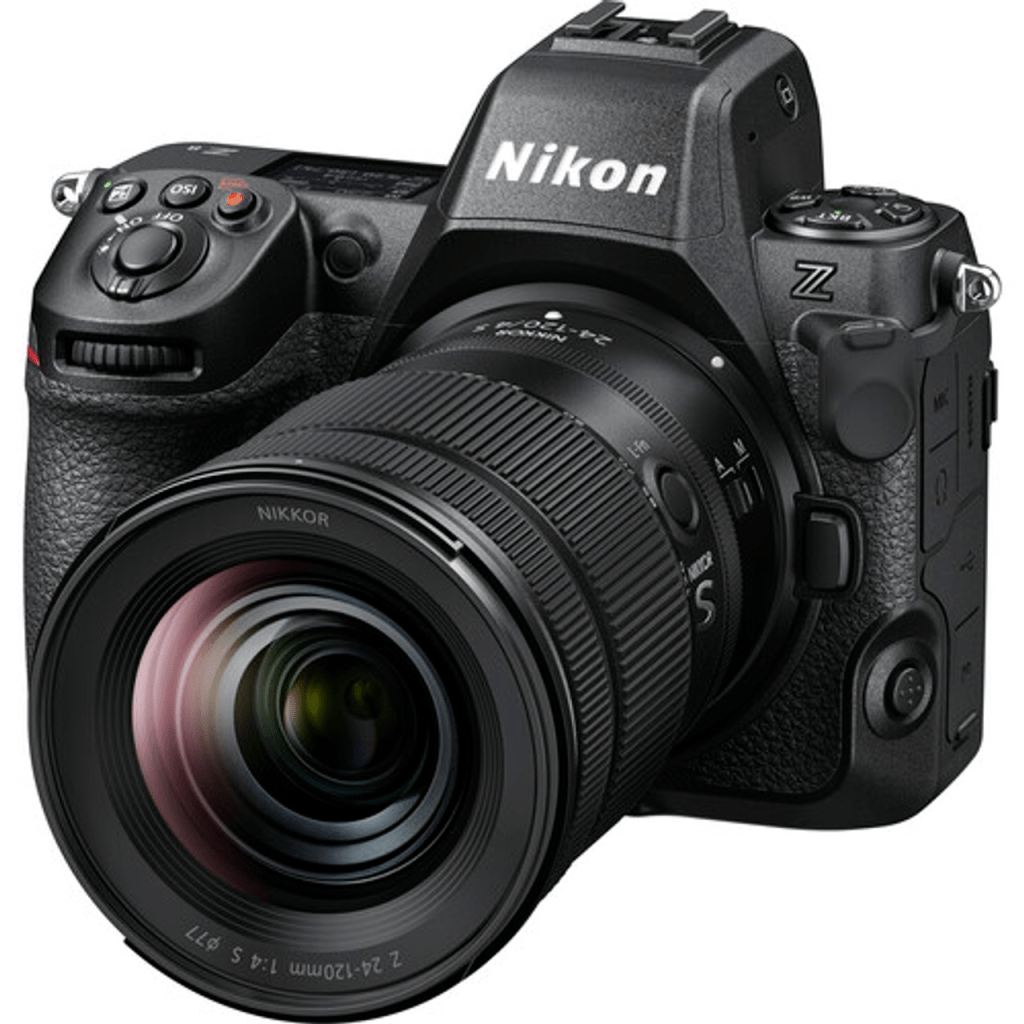
As a camera I almost always use a Nikon Z8 and a 24-120 mm f4, which allows me to shoot practically everything. Alternatively, I use the Nikkor 50mm f1.4 or the Nikkor 35mm f2, lens that I love.
You mentioned that you enjoy following the entire production process. How do you balance the roles of photographer and retoucher? Do you find one aspect more challenging or fulfilling than the other?
For me they are two equally important and fulfilling aspects. I always think about post-production when I project a shooting and while I shoot it. For me, the post is not just a final lifting process. It is part of the production process, and is a fundamental element.
Usually during the Shooting I realise the flattest images possible, so that I have more data than in post.
Maybe it’s also the moment where I feel freer to create, with the possibility of totally optimizing or modifying the “photographic bases” I have prepared.
What software(s) do you use for your retouching work?
I mainly use Adobe Photoshop, I also use two applications for photo editing of skin and imperfections, which for me are, artistically speaking, just a waste of time.
I use “Retouch Pro” to manually work on images, especially with frequency separation and the Dodge and Burrn technique, and “Retouch4Me” for skin imperfections, which uses IA to produce an excellent foundation to work on, but you can never trust…
Do you work with other book cover libraries besides Arcangel?
No. At first, I also tried Trevillion but they rejected me twice, without explaining the reason. On the contrary, Arcangel’s staff saw beyond, they saw my potential and invested in me.
I had made several ad hoc shootings just to get accepted by this other librarie, I didn’t like sharing the usual images in two different libraries. Of course, then I uploaded those Shootings to Arcangel after the rejection, and I made several covers with those works. Evidently something good was there 🙂
What are your thoughts on how Artificial Intelligence might disrupt the stock photography industry, and perhaps some of your client work? Do you see it as more of a threat or an opportunity?
Unfortunately, no matter how hard I try, I have to tell you that I see it more as a threat, because for a year now I have been seeing the damage and consequences, especially for my minor clients, who are now beginning to believe they can do everything themselves.
Just a few days ago, a long-time client of mine proudly showed me some of my photographs from three years ago where he had changed the backgrounds and other details with AI to use them again this year, so he wouldn’t have to do a new shooting. In addition to telling him that in my opinion he had not done a good job at all (terrible to be honest), I pointed out to him that I would still send him the invoice for the renewal of the rights of those images.
Only time will give us an answer, because soon practically everything can be realised by writing a prompt on an AI App. Already today, when you see the photographs, you don’t know what to believe anymore. This is not a new technique or a passing trend, here it is a global and total change in the concept of image.
We need to understand what the future of photography will be, understood as “shoot from the truth”, surely people who want to be portrayed cannot be replaced by artificial intelligence. At the moment I don’t use it at all, if not to delete unwanted objects from the background or to clean the imperfections of the skin, as I said before, for the rest I stay to watch, staying informed.
As an artist, illustrator and photographer at the moment I am simply hating it, after a lifetime spent trying to reach certain levels of quality. But unfortunately, we should deal with more and more. It’s useless to be conservative and turn your back.
Unfortunately, generative intelligence will always be better, the quality of images is a concept that will have to be completely reviewed and reinterpreted. Suffice it to say that after only one year no one marvels anymore at the beautiful images created with AI, they are now part of the norm, even for whom art is an unknown concept.
I remain firmly convinced that fully handmade photographs will always have a unique value, and I am pleased that Libraries like Arcangel do not accept AI, and I hope they will continue to do so over time.
Lastly, do you have any upcoming plans or future shoots you’d like to share with us? Are there any destinations you’d love to travel to for your photography?
Actually not. Normally I make plans from week to week, based on the market of new ideas. Surely, I would like to be able to travel for the shootings for Arcangel, I would like to go back to Ireland for example with a couple of models, but the costs right now would be too high and the game would hardly be worth it.
I was in Paris a few weeks ago and I took the opportunity to create a whole series of backgrounds that I will then edit on images already made or that I will make ad hoc. I did the same in the United States last year.
Shootings with models, especially historical ones, always have a very delicate balance between expenses and sales, and if you don’t respect it, You risk working just to be able to pay for the expenses, as it happened at the beginning. Maybe in the future I will also be able to upgrade. We’ll see!
Thank you very much, Leonardo, and I wish you continued success. Please visit Portugal – I’d be happy to show you some stunning locations for creating book covers!
Thank you Alexandre, it has been a pleasure and I would love to shoot in Portugal one day.
About Alex
I’m an eccentric guy, currently based in Lisbon, Portugal on a quest to visit all corners of the world and capture stock images & footage. I’ve devoted ten years to making it as a travel photographer / videographer and freelance writer. I hope to inspire others by showing an unique insight into a fascinating business model.
I’ve gone all in on submitting book cover images to Arcangel Images. Oh and was also flying a DJI Mavic 2s drone regularly (although it crashed into Botafogo Bay on NYE – here is the story), which I’ve upgraded to a Mini 3 Pro and the Air3.




 Alexandre Rotenberg's Brutally Honest Guide to Stock Photography & Footage
Great interview with a talented artist.
LikeLiked by 2 people
Thank you for this Alex.
I love LB’s work and I always look for his uploads when perusing the ‘latest’.
He makes me want to be in Italy in the 1940s in a wonderful outfit on a book cover (and of course the subject of the novel).
Very evocative photography.
Perfect nostalgia.
LikeLiked by 1 person
Fantastic interview! Thanks a lot!
LikeLike