Exclusive Interview: How Drone Footage Transformed Hugo Kurk into a Top-Earning Microstock Creator
Welcome to the 50th exclusive interview, today featuring Hugo Kurk, whose humble microstock journey began back in 2012. However, everything shifted in 2021 when he bought his first drone and instantly realised that aerial footage was cleaner, more scalable, and far more profitable than anything shot from the ground.
In an industry where many veteran contributors report declining earnings (or in my case stagnation), Hugo stands out as a true outlier, breaking personal records month after month and now earning an average of over $4,000 per month, primarily from licensing drone footage. Let’s get started!
Drone + Travel Background
Welcome to the blog, Hugo. For readers discovering you for the first time, how did your drone journey begin and what led you to focus on microstock rather than film-making or YouTube early on?
Thanks for inviting me on here, Alex.
My microstock journey started in 2012. I was still studying and looking for additional income, a side hustle. I learned about microstock and was fascinated by the idea of “making money online.” I bought a DSLR camera, the Nikon D5100, and also experimented with creating illustrations in Adobe Illustrator. These were skills I learned during my studies and could apply to microstock.
I wouldn’t call myself very successful at the beginning. I had lots of rejections due to technical quality and very few sales. I was finally accepted as a contributor at Shutterstock in 2018, I tried for six years. If I could give advice to my younger self, I would say: buy better gear and jump on the camera-drone train early.
Being based in the Netherlands, with easy access to Germany, Belgium, and France, what practical advantages does this give you as a stock-focused drone creator?
In Europe, and especially in the Netherlands, we are very densely packed with interesting subjects for microstock. Almost every square meter contains something man-made that represents a concept. The economies are well developed, which creates opportunities.
I’ve also been to countries where it’s harder to find topics. In Thailand, for example, you can drive for hours seeing only small villages and forest. It’s more challenging to find subjects and takes much more time. But of course, if that’s your environment, you can still learn what works and become efficient there as well.
What are the main downsides of flying in the Low Countries…some that come to mine include: strong wind and unpredictable weather. Anything else that you find problematic?
The weather predictions in the Netherlands are actually pretty accurate. I’ve been to mountainous places where forecasts are much less reliable. For example, in Madeira, locals told me to check webcams instead of the weather forecast. On trails leading up the mountains, it could be sunny one moment and completely covered in fog an hour later, with only a few meters of visibility. That made capturing microstock impossible.
In the Netherlands, we have fewer extremes like that. Wind is not a big problem either, especially with larger drones, they handle it very well.
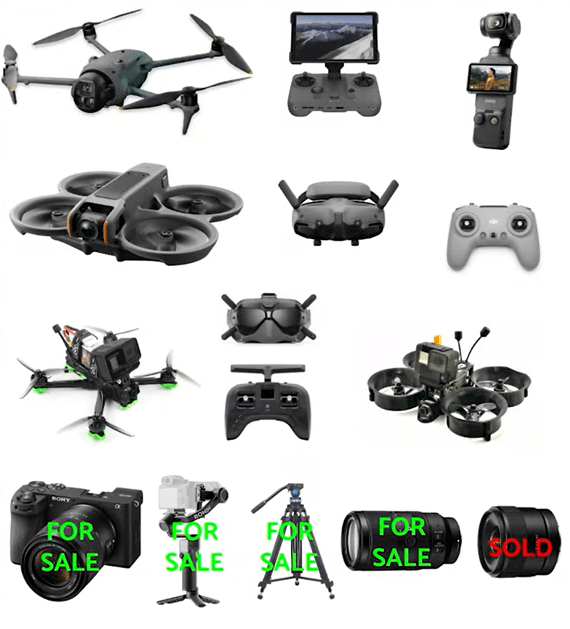
Which drones currently make up your fleet, and what role does each one play in your stock workflow? Are there any new models you’re considering for 2026?
Each drone has its own environment where it excels. I use a mix of FPV drones and foldable camera drones. The DJI Mavic 4 Pro Creator Combo is the one I use most at the moment. I believe it pays off to invest in the latest and greatest gear if you want to stay on top.
I’m also dreaming of the DJI Inspire 3, a Hollywood-grade drone, though it costs at least $20,000. But I think it would be a great investment to set yourself apart and lift your work to a whole new level.
There are also rumors of a new DJI Avata (an FPV drone) coming soon, apparently with a 360-degree view camera—something revolutionary. Based on DJI’s reputation, it will be good. And if you invest in new technology, I think microstock marketplaces reward you for it.
Hugo’s arsenal
Microstock Earnings & Strategy
When did you first start submitting to microstock, and how have your earnings evolved since then? Was there a moment when drone content clearly overtook everything else?
Like I mentioned earlier, in 2012 I started with handheld DSLR street photography, plus illustrations, vectors, and 3D renderings. In 2021 I bought my first drone and immediately saw the potential, everything looks great from the air. There is far less drone content available compared to handheld photography. And drones make it easy to capture high-resolution, stable video, which earns a lot more.
After uploading drone videos, my earnings improved significantly. Some aerial timelapses earned me multiple hundreds of dollars per year. Then I realized what could happen if I had 1,000 of these online. I turned that into a realistic and specific plan. It was just a matter of execution, I could even calculate how long it would take and how much I needed to upload daily to reach my goal.
To be successful, you must define your goal very specifically, understand what it takes to get there, write it down, repeat it to yourself, stick to it, and put in the work.
Roughly what percentage of your total microstock income now comes from drone content and can you break that down between aerial photos and aerial videos?
About 20% of my earnings come from photos and illustrations, and about 80% from videos. Around 98% of those videos are drone videos. Of those, about 90% are cinematic drone videos and 10% are FPV. My portfolio size varies per agency because some accept editorial footage and others don’t. Overall, I have about 14,000 videos, 6,000 illustrations, and 3,000 photos.
Your revenue has grown steadily while many contributors report declines. What do you attribute this success to. Is it down to consistency, subject choice, analytics, persistence, or something else?
All of the above. When people say their sales are in decline, I wonder: what did they invest? Probably not enough. Did they start contributing to new agencies? Buy new gear? Optimize their workflow?
I did all those things: adopting AI for keywording, automating my editing workflow with watch-folders, buying the latest drones, learning what sells over time, watching upcoming agencies. This way I became more efficient and could upload more and better content in the same amount of time.
If you keep doing the same things or upload less, yes, your sales will likely decline.
I also believe in tracking earnings carefully. Sometimes it seems like earnings are dropping, but over the long term they’re not. If you keep investing time, money, and energy, your skills should improve—and higher skill brings higher income.
When travelling specifically for stock, do you generally manage to cover the travel costs through sales? Are there particular destinations that deliver strong ROI?
Yes, especially in places that are new, have long daylight, lots of interesting subjects, and good weather. You can easily capture 500 videos in one day. If the average return per video is $2.50, you can do the math.
I usually start around 10 a.m. and continue until about an hour after sunset. I visit interesting places, go on hikes with my drones, and enjoy the experience. Travel costs are expenses, but I treat them as an investment. I combine what I like to visit with my microstock activities.
Which agencies perform best for your drone content today, and why? Do you participate in Adobe Missions for $92 a set or other curated programs?
Based on my earnings videos, Adobe Stock is the number one earner. But every agency has its strengths, some accept only images, others only videos. Over the years the rankings shift. Adobe wasn’t always number one; they recently overtook Shutterstock.
New agencies like Blackbox are doing well. And now companies focused on training AI models, like Troveo, are creating new opportunities. Some contributors have large video portfolios suitable for training. It’s another income stream. (Contact me if you’re interested in contributing.)
Keywording and metadata are crucial for discoverability. What is your personal method for creating titles and tags that reliably get your drone content found?
There’s a lot of debate: 50 keywords? Fewer? I haven’t found a single “silver bullet.” The most important rule is simply to describe accurately what can be seen.
I also “spread wide” by using multiple sets of different keywords for similar files and uploading them at different times across different agencies.
YouTube Channel & Monetization Goals
Your YouTube channel has become a natural extension of your stock career. What inspired you to start it, and how does it fit into your overall strategy of earning “passive income”?
I think it’s smart to diversify income streams. YouTube fits well because it’s video-based, just like microstock. I first tried uploading ambient drone footage, but there is already a lot of competition.
So I asked myself: what is my strength? What niche can I own? Microstock is where I have years of experience. I wanted to share that journey. At first, the views were low, but the reactions motivated me. And I enjoy making videos.
You’ve mentioned aiming for monetization, so how close are you, and what steps are you taking to accelerate watch-time and subscriber growth?
YouTube requires a lot of work before monetization. You need 4,000 watch hours and 1,000 subscribers. I reached 1,000 subscribers, which felt like a big achievement. When I had only 100, each new subscriber was a small victory.
Like microstock, or learning to ride a bicycle, you can’t expect to succeed immediately. You need to fall a few times, learn, practice, and keep going. Eventually, you make progress.
On average, how many hours per week do you dedicate to shooting, editing, keywording, and uploading, and have you seen a direct correlation between time invested and earnings?
Yes, there is definitely a correlation. If I stopped uploading today, I would see a decline over time, because agencies reward regular activity.
Time spent on shooting varies. Sometimes I travel for a week; sometimes I take a one-day trip to multiple locations in the Netherlands. I’ve built up a storage space full of footage that still needs uploading or keywording, so when the weather is bad I can work on that.
Something I do very regularly is uploading daily. On average, I spend about one hour a day on keywording and uploading.
Risk, Regulations & Real-World Flying
Many of your clips feature infrastructure such as ports, power plants, and data centres. Without revealing anything sensitive, how do you approach filming these subjects legally and safely?
You have to know the rules and regulations, respect privacy, avoid disturbance, and always fly responsibly. Within the boundaries of drone laws, there are plenty of opportunities for microstock.
DJI drones are relatively safe, with obstacle avoidance and return-to-home features. I think society should embrace drones,the technology offers many benefits.
I agree that drones have an unfair negative perception. How do you manage flight authorisations when travelling, do you follow a streamlined system, or is it a country-by-country process each time?
When traveling abroad, always check local drone rules to avoid surprises such as confiscation at the border. A good resource is your Drone Handbook, not just the rules, but real experiences in practice.
Within the EU, the rules are similar, which makes it easier. But further abroad it can be completely different. Some countries, like Morocco, won’t even allow drones to enter. Others have relatively mild regulations.
Which countries have been the most challenging for you so far in terms of drone regulations, enforcement, or bureaucracy?
I’ve been to places in Asia, like Thailand. I arranged the required permits and certificates, but there’s a big cultural difference and less clarity about enforcement. So even when you follow the rules, it’s harder to know what to expect.
Do you have any tips for both following the rules and getting the right shot?
Some of my bestsellers were created in my local area, the environment I know best and I can visit at optimal weather. I also understand the culture and economy better.
If you visit a country for the first time, it’s challenging to find hidden gems. You’re more likely to film topics that are already overshot. For example, in Paris you’ll immediately find the Eiffel Tower impressive, but commercially it’s probably not the best subject.
Have you ever experienced a drone mishap during a stock shoot? What happened, and what did you learn from it?
Yes, I’ve had crashes with my FPV drones. FPV flying is high-risk compared to stabilized cinematic drones. It’s fast, close to objects, and involves acrobatic maneuvers. With self-built drones, there’s also a higher chance of electrical failure or loose soldering.
To get spectacular footage, you must fly close—which increases risk. I’ve crashed in mountainous areas, and because the drones are expensive, you try to recover them, which can lead to hazardous situations. It’s important to understand these risks and factor them into your flight plan.
Drone manufacturers like DJI are trying to reduce these risks with emergency brakes, obstacle detection, and autopilot modes.
Market Insights & Advice
Which types of drone content are selling strongest for you right now, is it mainly infrastructure, such as data centres and power plants, ports, etc. or something else?
Yes, data centers sell very well—reflecting the AI boom and the expansion of digital infrastructure. The other topics also perform strongly. Economic activities involving companies and many people tend to sell well, just like cities and skylines.
With AI rapidly advancing, do you believe real aerial footage is more resilient to AI replacement, or do you think AI-generated aerials will catch up too?
I think AI brings more opportunities than threats—just like many major inventions in history. When the internet appeared, people feared job loss, but it created many more jobs.
So far, AI has brought extra income: you can create AI video and sell it, license footage for model training, use AI to help with keywording, and sell images and videos of the infrastructure behind AI.
What advice would you give a new drone pilot entering microstock in 2026 who aims to realistically earn €200–€300/month to cover their gear upgrades and reasonable travel costs?
Get a decent drone that lets you produce quality footage with minimal rejection.
Build an efficient workflow to minimize time while maximizing output.
Make uploading a daily habit, and keep it going for a long period.
Stay persistent—persistence combined with genuine desire will be rewarded.
Looking Forward
Where do you see your drone + microstock + YouTube journey heading in the next 3–5 years?
I achieved my goal of quitting my 9-to-5 and going full-time microstock/YouTube in August 2025. Now I’m focused on improving my YouTube skills. Monetization will be the next big milestone.
After that, I hope to grow the channel further and travel more. I’m excited about new drones and the direction the technology is heading. I still get amazed by the footage my current drones produce. I’m motivated and enjoy the freedom and creativity.
And finally, do you have any exciting travel plans for 2026 where you hope to capture new drone stock content? Ideally including Portugal, where I’ll gladly show you some fantastic spots!
Right now, I’m really inspired by China, the home of DJI. There are amazing technological developments happening there. I’m also looking at other places in Asia, where the weather is great this time of year. Meanwhile, the Netherlands has short days and cold winter weather, which is sub-optimal for microstock.
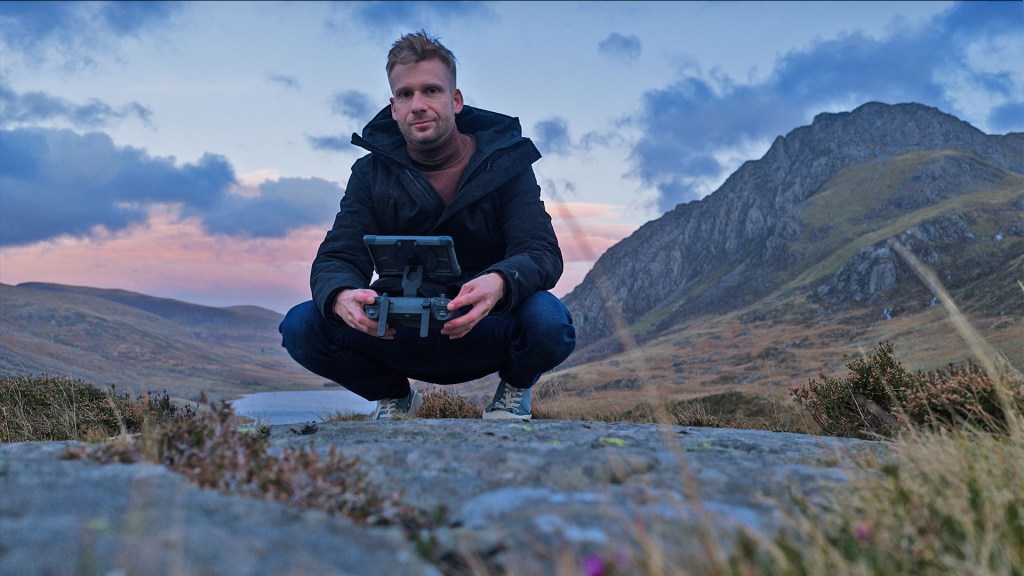
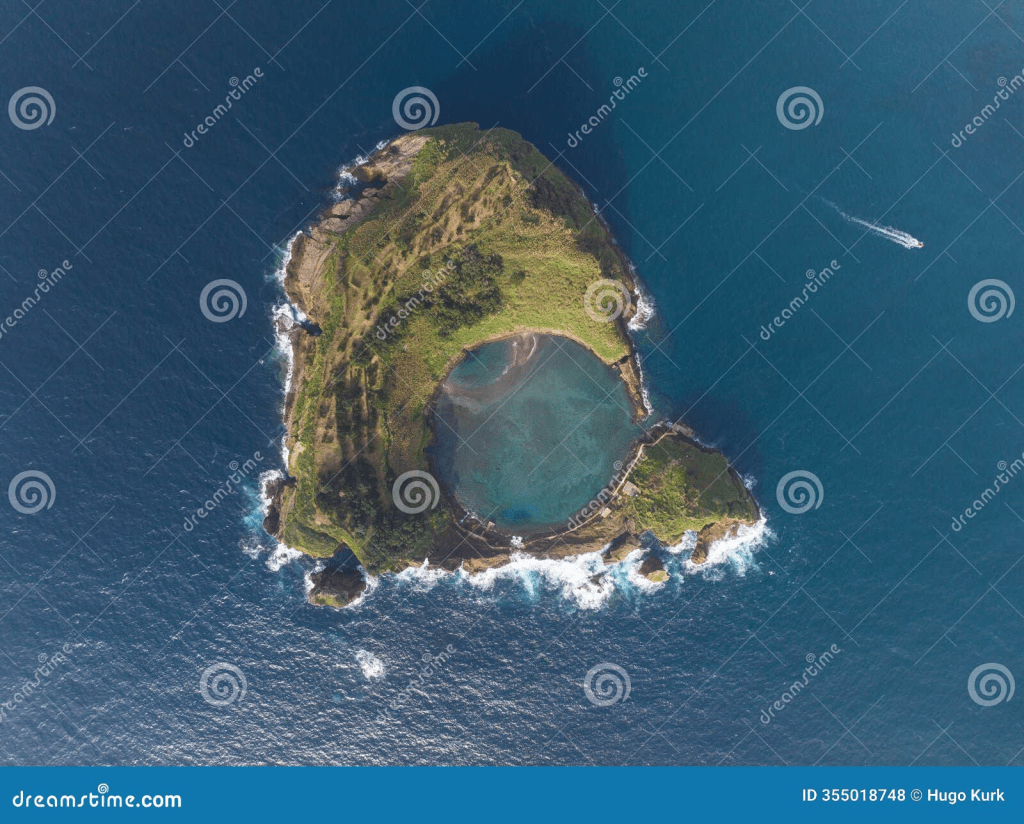
Thank you! If I ever come to Portugal again (I’ve visited the Azores, see the image below), I’d love to meet and exchange insights with a fellow experienced microstock contributor.
About Alex
I’m Alex, eccentric, based in Lisbon, and on a mission to explore every corner of the globe while capturing stock images and footage along the way.
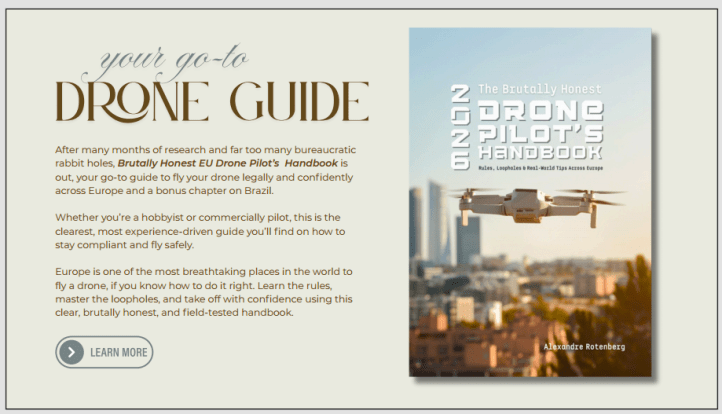
For the past 12 years, I’ve been grinding as a travel photographer/videographer and freelance writer. Along the way I’ve also written The Brutally Honest Guide to Microstock Photography, a book packed with war stories and practical tips for anyone crazy enough to enter this business and more recently, The Brutally Honest Guide to Drone Laws in Europe.
Alex, thank you for another timely interview and for sharing Hugo’s journey. I had the opportunity to watch some videos from Hugo’s channel; the content is really interesting and practical. Hugo, thank you for sharing, and I wish you much success.


 Alexandre Rotenberg's Brutally Honest Guide to Stock Photography & Footage
Great article Alex – very interesting. I must get my drone out and take some videos!
LikeLiked by 1 person
Alex, thank you for another timely interview and for sharing Hugo’s journey. I had the opportunity to watch some videos from Hugo’s channel; the content is really interesting and practical. Hugo, thank you for sharing, and I wish you much success.
LikeLiked by 1 person