Interview with Stephen Mulcahey, Arcangel & Trevillion Book Cover Contributor
Continuing on with this blog’s exclusive interview series, few creatives bridge the worlds of design and photography as seamlessly as Stephen Mulcahey. From cutting his teeth on textbook covers in London to art-directing bestsellers at Penguin Random House, Stephen has spent decades shaping how books look and feel on the shelf. Today, his Arcangel and Trevillion portfolios, with over 15,000 images combined, have appeared on thousands of covers worldwide.
In this brutally honest interview, Stephen looks back on the moments that defined his career, shares the challenges (and joys) of bringing history to life through photography, and weighs in on the future of book cover imagery in the age of AI. Oh and also gives me some advice on how to improve on my own covers. Let’s get started!
Hi Stephen and welcome to the blog. Could you tell us a little about your background, where you’re from, how you first picked up a camera, and how that path eventually led to book cover photography with Arcangel and Trevillion? Looking back, what were the key moments that shaped you into the professional you are today?
Hi Alex, thanks for having me on! grew up in Liverpool and began studying art and design, later specialising in graphic design at the Norfolk Institute of Art and Design. That’s where I first came across photography. This was pre-digital, so I couldn’t afford a camera at the time but the seed was planted, and I’ve been fascinated ever since.
My first job was at an advertising agency in Liverpool, where I learned a little bit of everything. When the agency folded, I moved to London and became a book cover designer at Longman Higher Education. These were textbooks, but surprisingly creative, I had to come up with visual solutions for every subject under the sun, often on tiny budgets. From there I moved into science fiction covers with Titan Publishing, and then to Carlton Publishing, designing record sleeves and film/TV DVDs. I loved the speed of that environment — designing one week and seeing the finished product on HMV’s shelves the next.
As streaming reshaped the music industry, I returned to publishing, this time on the trade side. I worked at Orion, Headline, and then spent 15 years at Transworld (Penguin Random House) as Assistant Art Director. I had the privilege of working on covers and branding for bestselling authors including Lee Child, Frederick Forsyth, Andy McNab, and Giles Kristian.
In 2018, I went freelance. That gave me the freedom to collaborate more widely and spend more time behind the camera. During my years as a designer, I was always hunting for the perfect stock image and often couldn’t find it. So I started creating my own. At first it was just a weekend hobby, but soon my images were appearing on covers. Submitting to stock libraries taught me a lot through trial and error. By the time I joined Arcangel in 2010, photography had become a serious part of my career. I began working with models, hiring costumes, and developing my own style of digital composites.
Looking back, each step, from agency life in Liverpool to art direction in London, built towards what I do now.
Your Arcangel portfolio (12,907 images) and Trevillion portfolio (2,459 images) span fiction, non-fiction and illustrations. Which areas give you the most creative satisfaction, and which push you the hardest as an artist?
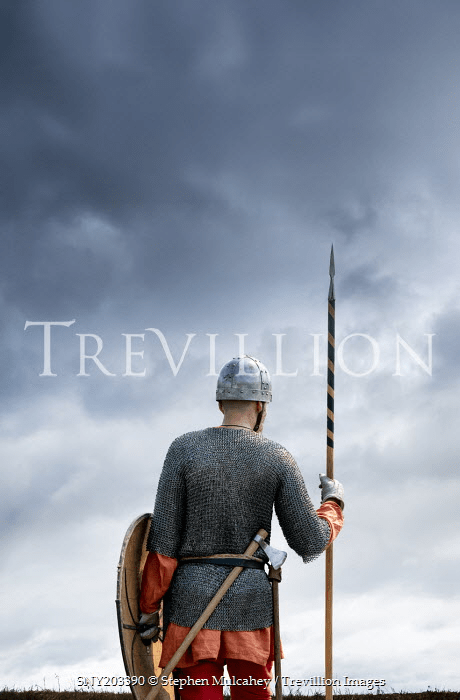
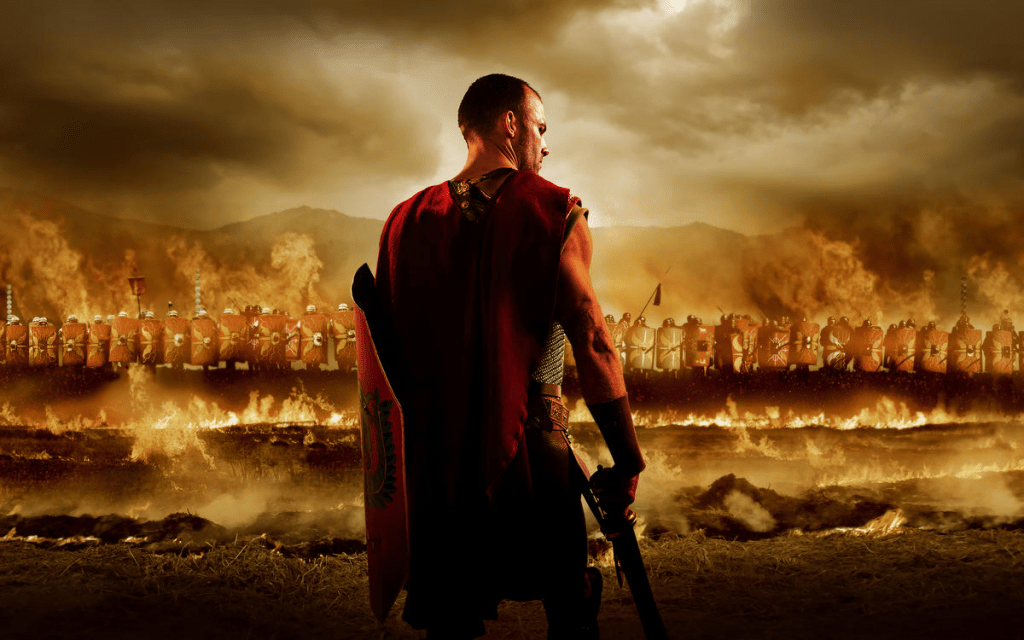
Historical fiction is where I find the most satisfaction. Early on, I noticed there were very few stock images of Roman soldiers, yet so many books being published in that genre. I began researching, attending re-enactments, buying props and uniforms, and creating my own shoots. Those images went on to be used for authors like Simon Scarrow, Harry Sidebottom, and Anthony Riches. That gave me confidence to expand into other periods – medieval, 1920s, 1940s — each with its own challenges.
Every era pushes me in a different way. It requires historical accuracy, costume organisation, and then the creativity to make the final image cinematic. But I enjoy those challenges; they keep me fresh as an artist.
For contributors, the Arcangel vs. Trevillion choice is a mystery. How do you personally decide which images belong in which library, and what do you see as the main differences between the two?
I enjoy working with both. I started with Arcangel and with them for many years . But on the recommendation of a fellow photographer, and later added Trevillion to broaden the reach of my work. It’s a bit like the Tesco vs. Sainsbury’s debate – some designers prefer one, some the other, and it often comes down to taste.
Sometimes a particular image simply “fits” better with one agency’s aesthetic. I try to keep my shoots separate, with some images designed specifically for Arcangel and others for Trevillion. That way I’m catering to both markets without overlapping.
May you walk us through your process for working with models – how you find them, what you look for, and how you approach a shoot?
I started out working with friends and family, then gradually approached people I met socially if I thought they had a versatile look. I’d hand them a card, show them my portfolio, and if they were interested we’d sit down and discuss ideas. Building trust is essential — if a model feels uneasy, I always encourage them to bring a friend.
I source costumes based on the shoot, take measurements, and often use modelling sites like PurplePort or ModelFolio to find new talent. On set, I keep models involved by showing them images as we go and explaining what we’re aiming for. Afterwards, I send them a selection of the best shots for their own use. That way, it feels like a collaboration rather than a one-way process.
Do you believe there’s still room for “happy accidents” in book cover photography, or has the industry become too tightly guided by briefs and trends?
Absolutely, happy accidents happen all the time. The key is to stay alert and open to them. I always carry a camera, either my Sony RX100 or even my iPhone, which now shoots RAW. Some of my best ideas have come from walking the dogs in the woods and stumbling across a scene that feels perfect for a crime thriller.
Briefs and trends shape the industry, of course, but serendipity still has a role.
You’ve licensed a huge number of book covers over the years, do you know roughly how many? And do you have a few personal favourites?
A rough estimate would be around 3,500 covers, combined with CollaborationJS. I feel very fortunate, but it’s also the result of persistence and time. I do have favourites, often tied to the creative challenge behind them. Some of the Roman and Viking covers stand out because they required so much preparation, but when they worked, they really worked. Those are the projects that stay with me.
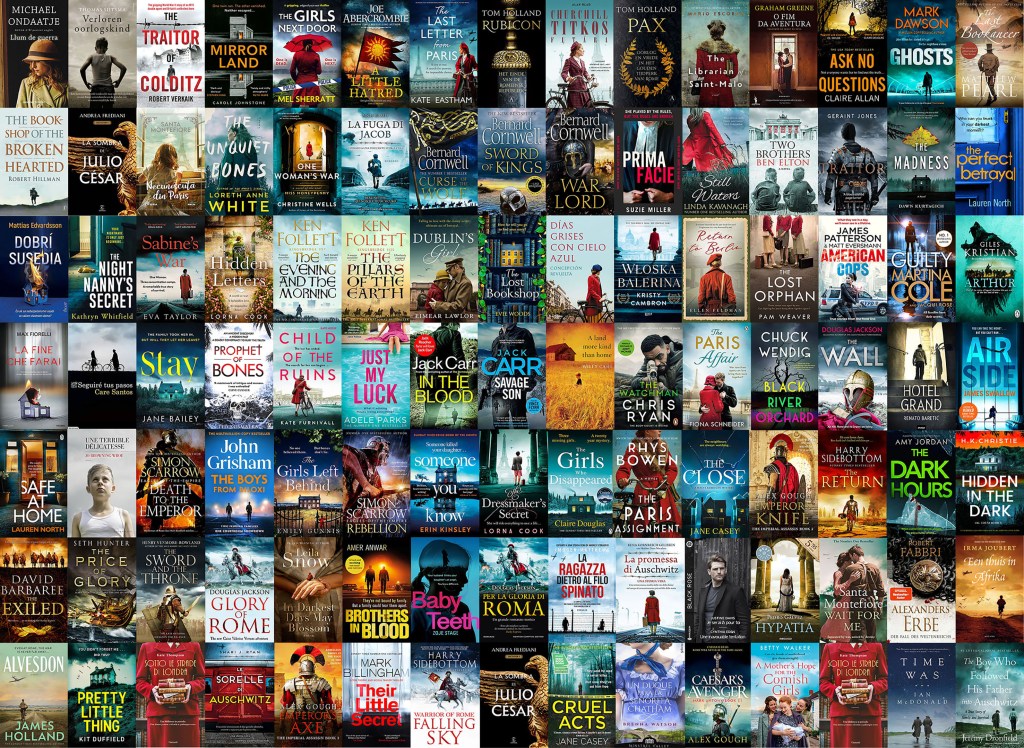
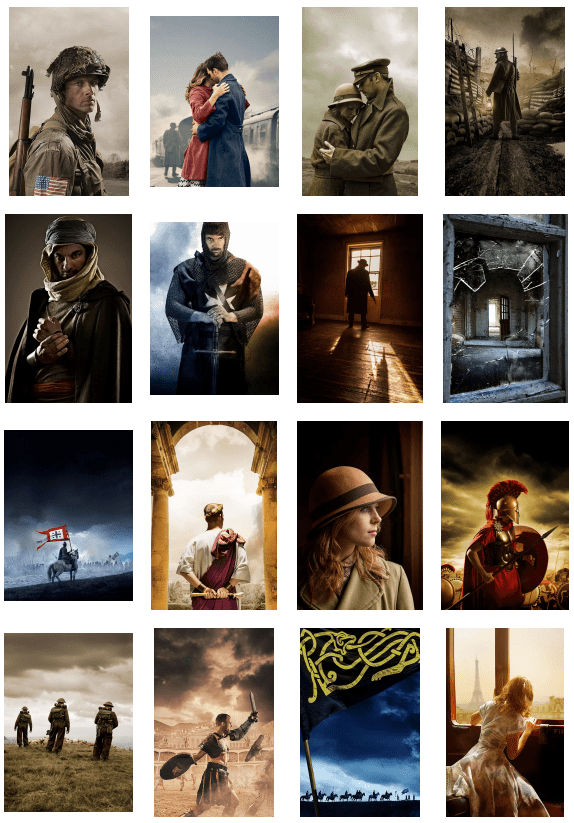
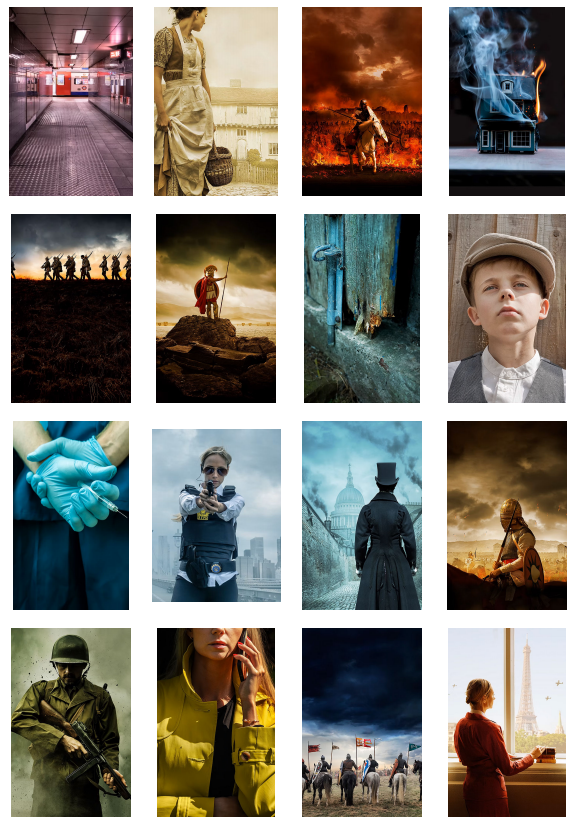
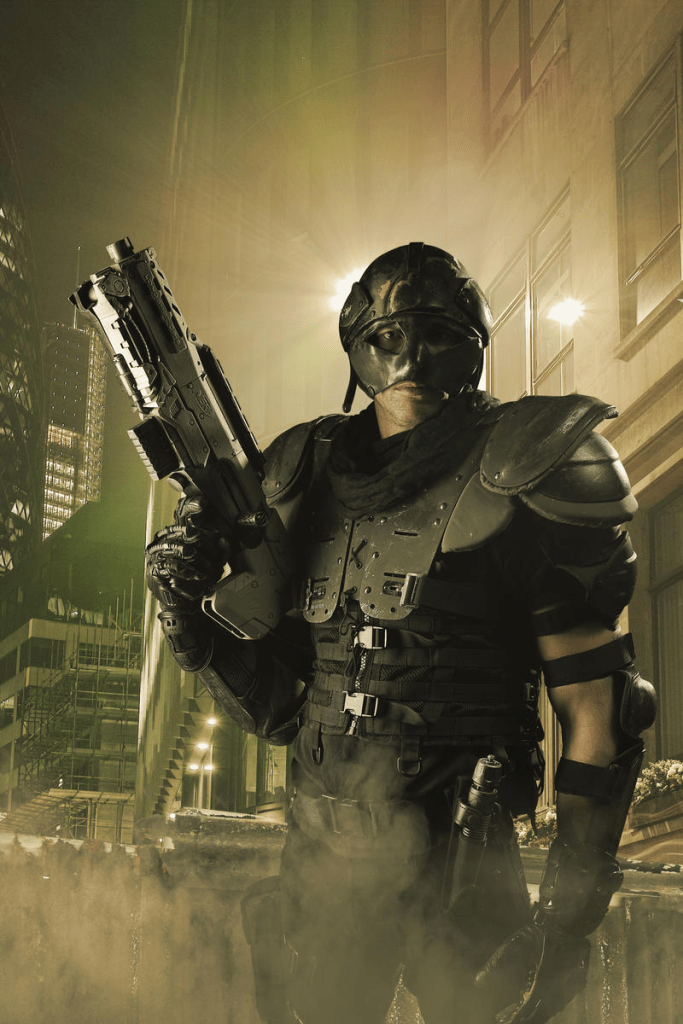
Some of Stephen’s favourite covers with his images
Many of your covers feature historical or cinematic themes (Roman soldiers, dystopian worlds, etc.). Where do you draw inspiration, and how do you keep the imagery fresh?
I think of my images as visual storytelling. I use layers, background, mid-ground, foreground, to create depth and make the viewer feel as if they’ve stepped into another time.
I’ve always been a huge fan of cinema and movie posters, especially how a single image can capture the entire essence of a story. I also draw inspiration from film and TV title sequences, which are endlessly inventive. They push me to think differently about composition, colour, and mood.
How does your work as a designer influence your photography for book covers?
It influences everything. I’m constantly framing shots with type placement in mind – leaving space for titles, subtitles, and author names. Years of sitting in cover meetings have also taught me what publishers tend to dislike. For example, they often avoid full faces, preferring silhouettes or profiles so readers can imagine characters for themselves. That’s why so many covers feature people walking away from the camera. I always shoot multiple options, both with and without faces, so the designer has flexibility.
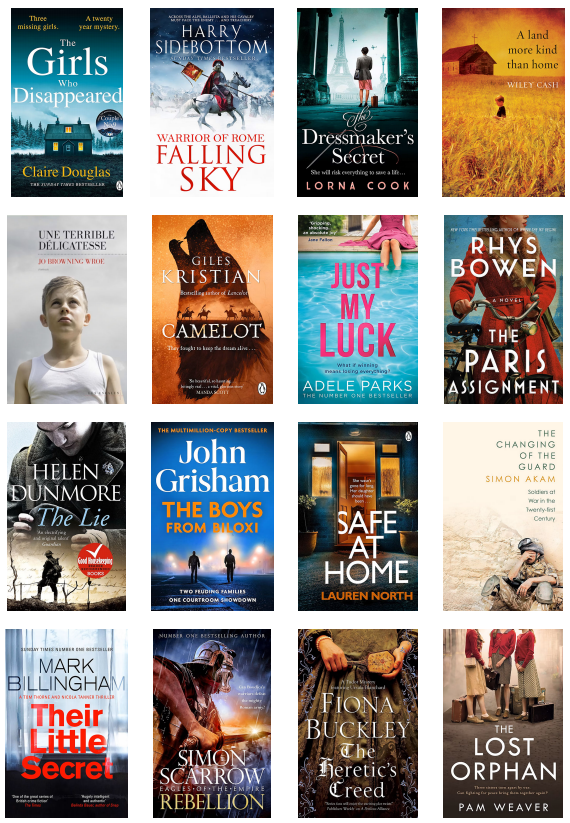
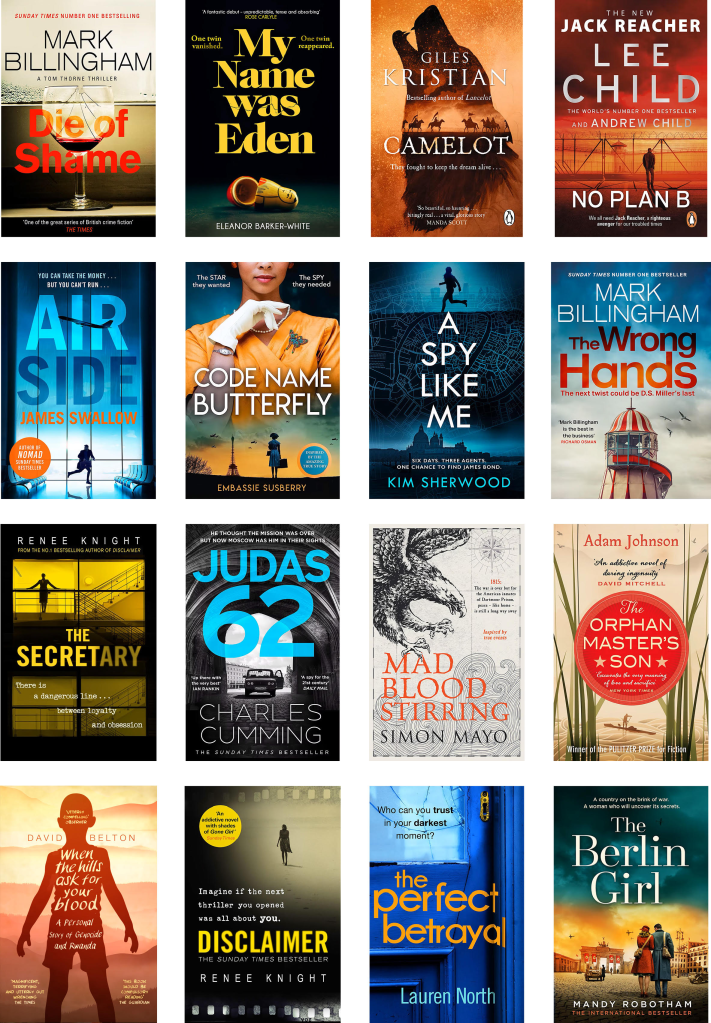
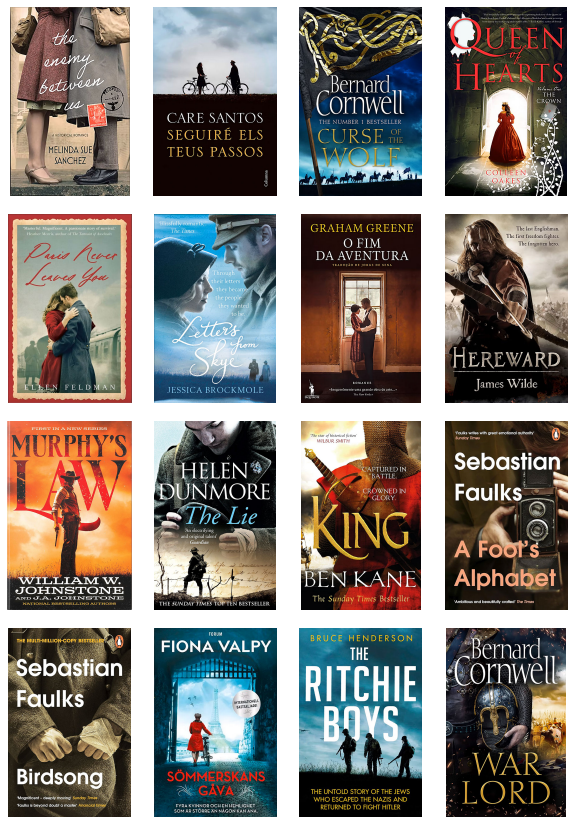
Covers that Stephen has designed
What unique challenges does book cover photography pose compared to other types of commercial or editorial work?
Commercial photography is usually about showing a product clearly. Book cover photography is about atmosphere. The image isn’t just a picture — it has to suggest a story, set a mood, and intrigue a potential reader enough to pick up the book. That’s a very different challenge, and one I love.
Which gear do you find indispensable for your cover work? Do you experiment with drones?
My main kit is Sony A7s — I have a Mk II, Mk III, and Mk IV — along with an old Canon 5D and a Sony RX100 for everyday carry.
I do own a DJI Mavic drone and have experimented with it, but cover deadlines often leave little time for play. It’s something I’d like to explore more when I can.
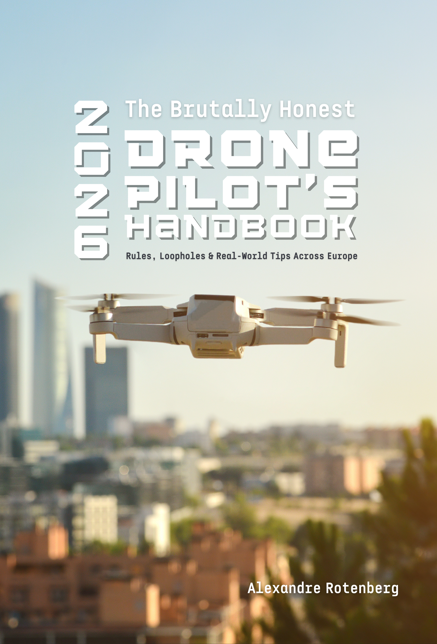
I hear you have a guide coming out soon on drone laws and tips which I’m keen to have a look soon to take with me on my travels.
Coming soon…
For those hoping to break into book cover photography, what brutally honest advice would you give?
Do it sooner rather than later. The stock industry is changing fast, with fees dropping and AI images flooding major libraries. It’s tough to see, especially knowing how much talent is out there.
That said, there’s still a place for real photography. Big publishers are currently anti-AI, partly to protect their authors, but smaller publishers are already embracing it for cost reasons. My advice? Build your portfolio now, while the door is still open.
You’ve also been involved with CollaborationJS. Could you tell us more about that project?
I first met Johnny Ring in 2007 when I was at Transworld. I commissioned him for several covers and we quickly became friends. We realised that by teaming up we could do bigger, more ambitious shoots — complete with makeup artists, multiple models, and detailed props.
We also began building a collection of costumes and props, from Roman armour to WWII uniforms. Having that lock-up of resources cuts costs dramatically and allows us to stage historically accurate shoots. Johnny’s experience has taught me a lot, and collaborating means we can divide responsibilities — while one shoots, the other focuses on styling, costumes, and logistics.
AI is reshaping the creative industries. Do you see artificial intelligence as a threat or as a tool for book cover photography?
Honestly, I see it as a threat. I try to stay positive, but there’s no denying how fast it’s advancing. The good news is that most major publishers currently ban AI images, but smaller independents are already using them.
As a designer, I’ve used AI for covers and while it can be impressive, it still lacks consistency and human creativity. For now, I believe nothing beats a real photograph crafted with intent, but we’ll have to see how long that lasts.
Finally, do you have any upcoming projects or future goals you’d like to share?
I haven’t been shooting as much recently, but I plan to get back into it with renewed energy. Johnny Ring and I are already discussing new subjects and fresh directions for future collaborations. I’m excited to see where that leads.
I would love to reach your level of success, would you kindly share some tips for success by looking at my portfolio at Arcangel?
You are getting better so keep at it.
It’s all about the content. I would suggest to walk around the bookshop and note down the themes of the books its all about the stories. You’ll notice that the same themes come up again and again . The same with TV and film. Then shoot those subjects and themes, that way you know what images you are shooting for and that there is a market for them. For instance, crime books, Historical, war, military, science fiction, fantasy, Love, violence etc.
Thank you very much for the encouraging words and for this interview, Stephen. Wishing you and CollaborationJS continued success!
I’m Alex, eccentric, based in Lisbon, and on a mission to explore every corner of the globe while capturing stock images and footage along the way.
For the past 10 years, I’ve been grinding as a travel photographer/videographer and freelance writer. Along the way I’ve also written The Brutally Honest Guide to Microstock Photography, a book packed with war stories and practical tips for anyone crazy enough to enter this business especially in 2025.



 Alexandre Rotenberg's Brutally Honest Guide to Stock Photography & Footage
Good interview Alex. You managed to get one of the titans of the book cover world.
LikeLiked by 1 person