
This past week, I’ve turned my full attention to optimising my Fine Art America (FAA) portfolio to achieve sales. In late June, I wrote about FAA – that post is available here as part of my series on Opportunities Outside of Microstock.

I haven’t had any sales on FAA, which is frustrating. So, I’ve decided to take an active approach and I’ve been discussing with veterans on their friendly forum on how to get my collection up to speed. In fact, I have no issues with creating a thread within the forum and in a friendly way requesting advice – most people are more than willing to help.
A Recap on how Print on Demand differs to Microstock
Edward Fielding in the FAA forum wrote the following, which I found describes the differences brilliantly:
“Microstock:
– microstock sells to professional image buyers who need lots of low cost images every day
– microstock companies have a customer base that frequently licenses from them – many pay a subscription
– designers are buying for their business using the company’s money
– Could care less about the image supplierFine art buyers:
– Are spending their own hard earned cash
– Are making the occasional purchase for themselves or as a gift
– Are buying something for the living room or office
– Might come to FAA once in their lifetime
– Care to know about the artist they are supporting”
The key takeaway from the above is that most buyers care as much as who the buyer is as the content of the print, so need to spend time promoting YOURSELF as an artist/brand.
Issues that were holding me back from achieving sales
Turns out that I’ve been making the following mistakes. Better late than never and here they are in no particularly order of importance:
- Not creating a collection;
- Not including detailed descriptions;
- Taking a passive approach, not marketing within FAA;
- Taking a passive approach, not marketing outside of FAA;
- Not consistently adding new images to my portfolio.
I’ll deal with each of the above categories separately.
By the way, here’s a link to my FAA portfolio.
Not creating a collection
Until quite recently, my 200 or so fine art images were not separated by categories. This made it confusing for potential buyers to sift through pages and pages of unrelated imagery.
To remedy this situation, I’ve painstakingly gone through each one and looked for general patterns, then created folders to separate them. I’ve opted for the following collections:
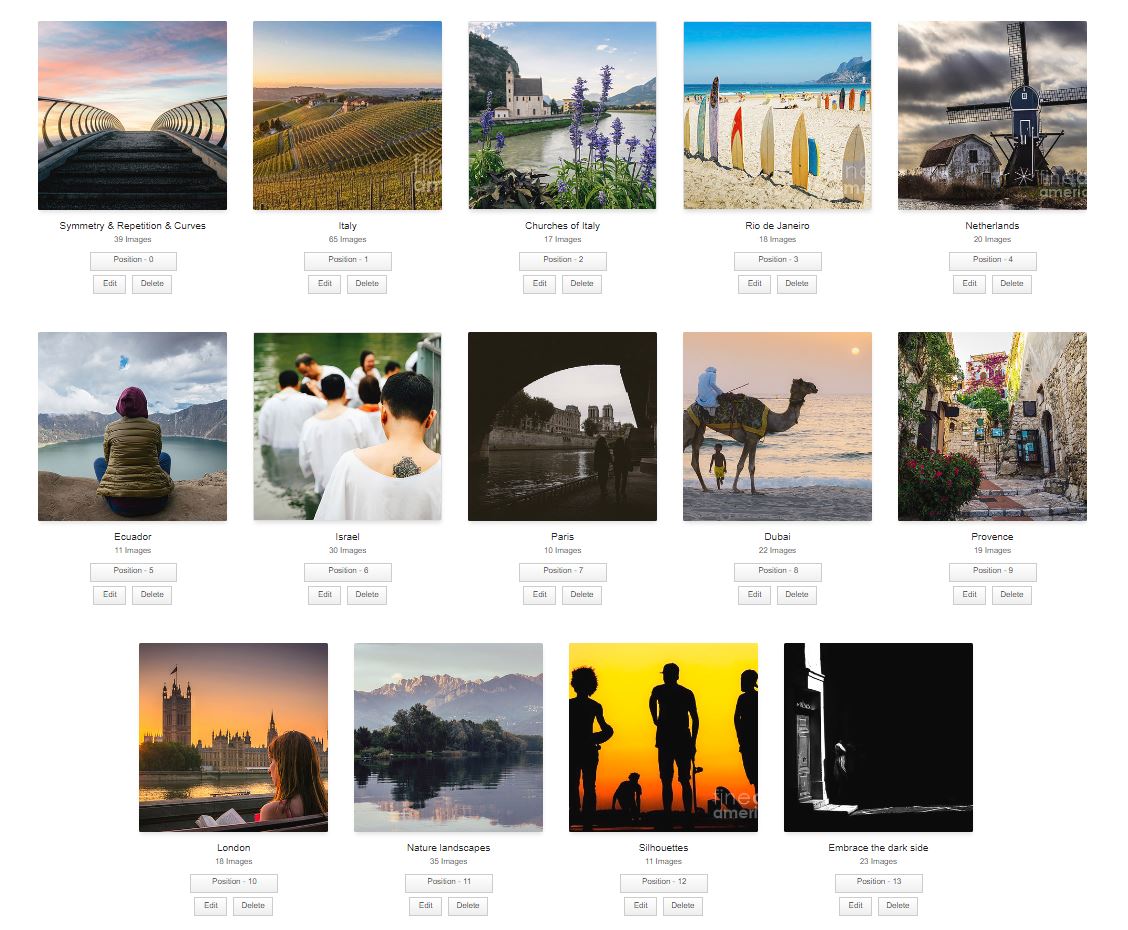
Also, when a potential buyer visits my profile, they’ll be automatically taken to this landing page. There will be some images which are on multiple collections and that’s fine.
Not including detailed descriptions
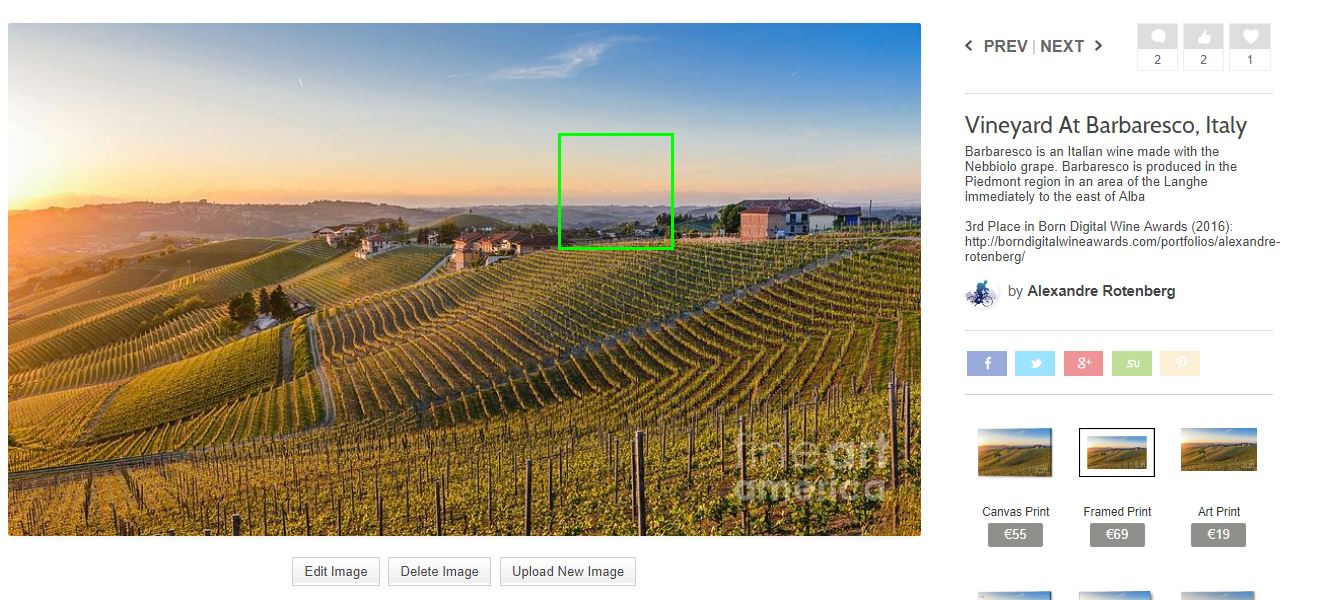
One advice I received over and over was to be sure to add a story of some kind to go with the image in the description field. This could even be poetic/sentimental.
In my case, since most of my images are travel, I’ve included detained descriptions of the location and history behind the image, such as the following:
Taking a passive approach, not marketing within FAA
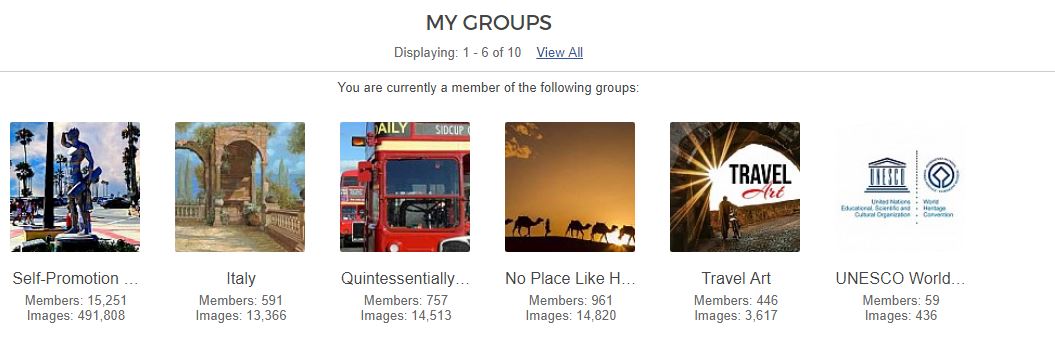
Within FAA, there are 100s of different discussion groups specifically catered to different types of fine art. I joined a few which interested me and introduced myself. They also have the option to self-promote your work by embedding your images within the discussion. This leads to more views, followers and potential sales. I’ve been told that some buyers hang out at these forums, so it’s a good idea to be active.
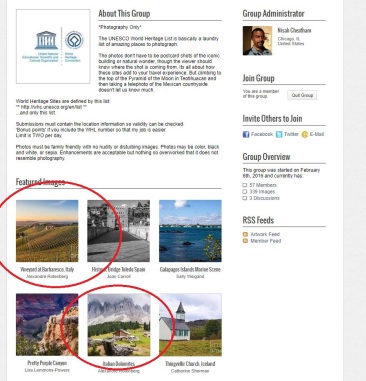
One such group is the UNESCO World Heritage sites group, which I’ve submitted two of my travel images which are places that have been nominated by UNESCO – they’ve been featured in that group:
In addition, at any given time there are dozens of free contests (entries are limited) which are for fun and can lead to greater visibility. Some “prizes” include being featured by FAA on their social media. Most importantly is the increased visibility within the community and with potential buyers.
Taking a passive approach, not marketing outside of FAA
At the end of the day, the vast majority of buyers will come from OUTSIDE of FAA. Rich Franco in the FAA discussion forum stated the following which I found interesting:
“Think of FAA as only a huge warehouse and you and a few hundred thousand other artists, have their work “stored” there. In nice neat little boxes. WHEN something is sold, the workers come, get that image, make a print and then return it to that box. That is what FAA does and not much more for the vast majority of artists here.
YOUR job is to get buyers interested in looking at your stuff, over the MILLIONS of other boxes of stuff and then purchase your stuff! Once you cross some imaginary line of sales, then FAA will begin to “help” you market, but until then, you’re on your own!”
So, how do I get buyers to look at my “box”? Naturally, the first step is social media. Social media such as Facebook, Twitter, G+, Linkedin and others are a place to start because it is free and it is easy to do.
I’ve been promoting considerably on Linkedin since I have 500 or so mainly-corporate connections. I’m also a member of some photography groups also within Linkedin that are OK with some self-promotion.
Who knows, maybe a few of my Linkedin connections will think of me next time they’re looking to purchase a fine art print to place on the wall of their office or give as a gift.
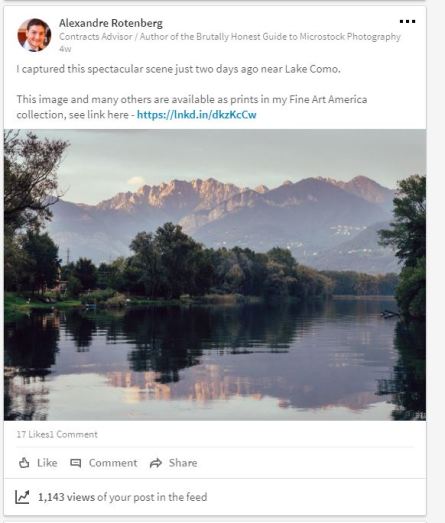
Social media can only take you so far, though. I’ve been advised to put together regular e-mail newsletters to followers, starting with followers who already love my work on FAA.
Local galleries are also an option. I’ll go ahead and show one of my styles that I think might garner the most sales in a local gallery or fair. Another idea is to make a brochure and hand them out to potential customers (or put it with your work in your local gallery or fair).
Mike Savad, a veteran at FAA, gives some useful tips on a FAA discussion thread he created
Not consistently adding new images to my portfolio
A well known artist can get away with only having a few dozen images on their portfolio. I’m not quite there yet and need to have 100s of options to increase the possibility of sales.
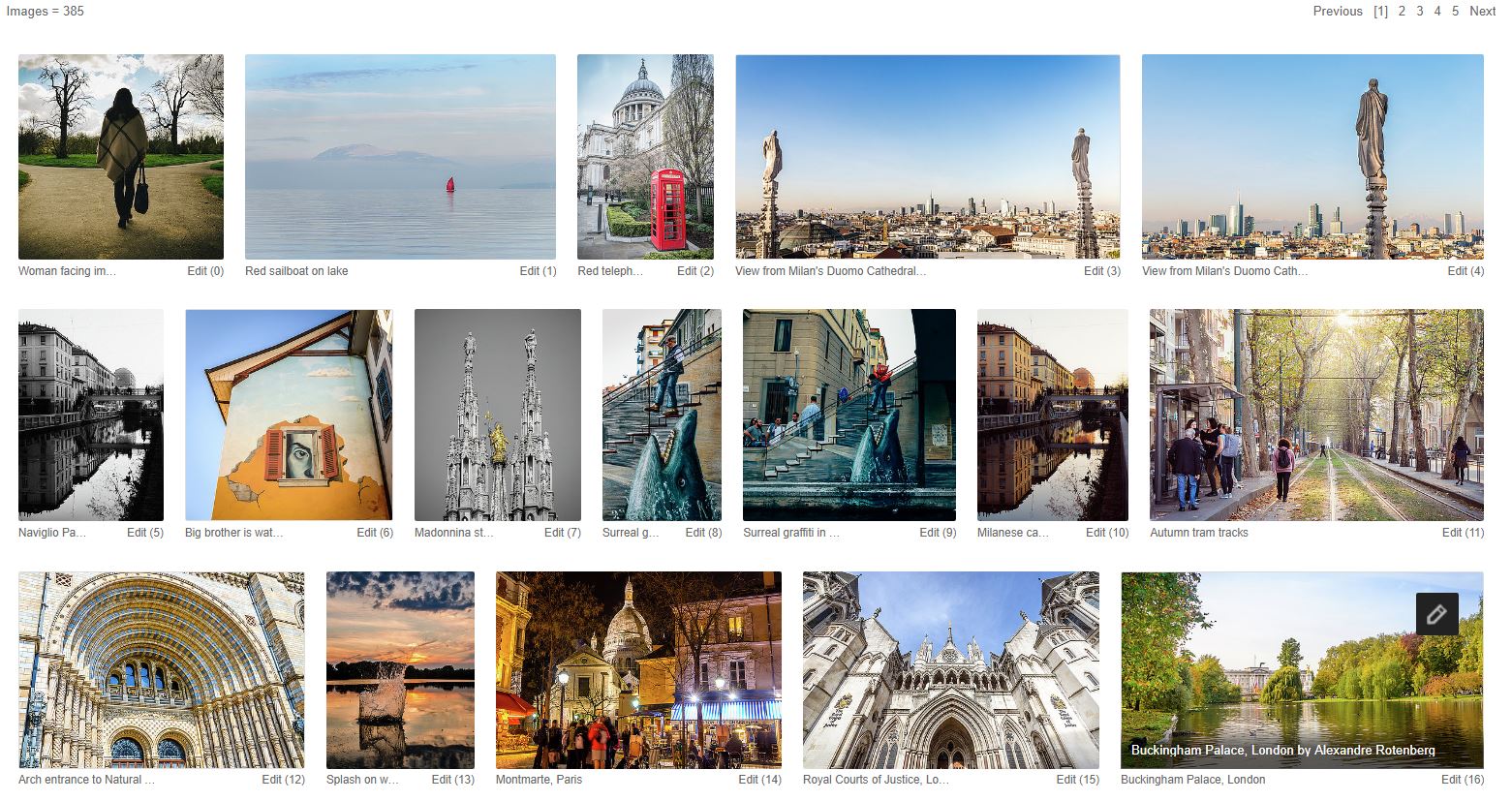
Overall, I’m being quite selective on only uploading my best images to FAA and making sure that they’re keyworded well & captioned. Nevertheless, the advice I’ve been given is to try to consistently upload LOTS of images and consider different variations of existing images such as black and whites, sepia tones, details and other variations.
I’ve set myself a goal of 50 quality images per month to upload to FAA. So far I have 385 images, which means in a year I should have about 1000 images on there. Here are some of my latest uploads:
Another advice is to get rid of the watermarks, since they DO discourage buyers. According to veterans, the protection is not as much as you think it is. The low res image loss is not a hard money loss. The sale of an image IS a hard money loss.
The best piece of advice I’ve heard
Floyd Snyder: “You HAVE to keep a positive attitude. Block out the negative Nellies and stay positive. I have never met a successful salesmen that spent a lot of times in the “woes me” state of mind. You got to stay positive!!”





 Alexandre Rotenberg's Brutally Honest Guide to Stock Photography & Footage
Leave a reply to brutallyhonestmicrostock Cancel reply